For a few days in early October, the bus stop on Damen Avenue near Thomas Street had two benches. One was an advertising bench the city had just installed. The other was a homemade bench painted blue and yellow, made by neighbors about a month earlier for a stop that had nowhere to sit. A Block Club Chicago photographer caught them next to each other.
The homemade bench wasn't torn out after the city's bench arrived. Its builders moved it to another stop that had no seat. Wherever it sits now, it shows where the city's next bench could go.
Four Stops, Two Kinds of Seat
Here is what's in place on the two main bus lines through Ukrainian Village, based on reporting from early October.
Stop | What's there | Since |
|---|---|---|
Damen Avenue near Thomas Street | City-installed ADA-compliant ad bench | Monday, Oct. 5 |
Division Street near Oakley Boulevard | City-installed ADA-compliant ad bench | Monday, Oct. 5 |
Damen Avenue at Augusta Boulevard | Homemade blue-and-yellow bench, moved from Damen/Thomas | After Oct. 5 |
Division Street at Leavitt Street | Homemade blue-and-yellow bench, moved from Division/Oakley | After Oct. 5 |
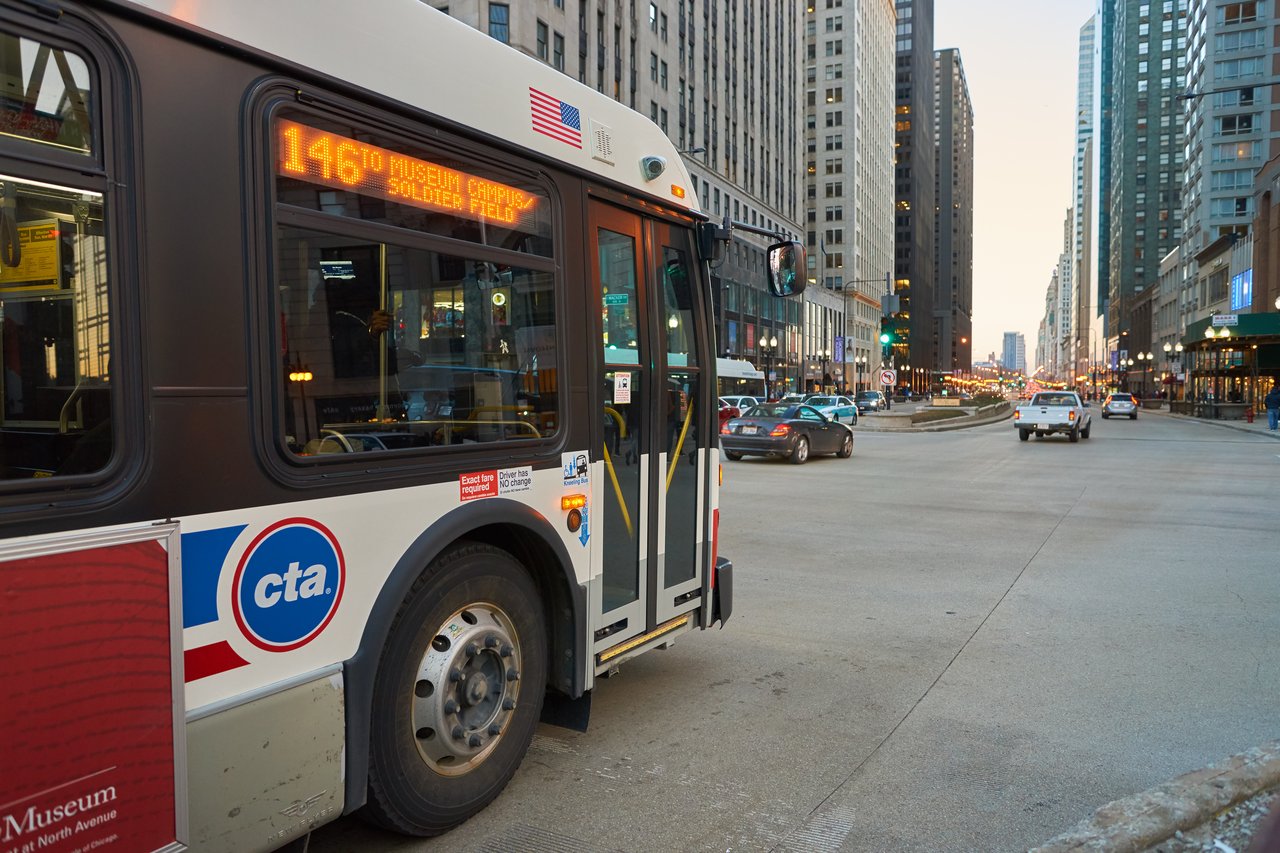
The Chicago Sun-Times identified Division and Oakley as a #70 Division stop. The Damen stops are on Damen Avenue, where CTA runs the #50 Damen route. The homemade benches were never bolted down or chained, so nothing tied them to their first stops.
A $40 Bench and a Month-Long Wait
The benches came from the Northwest Neighborhood Alliance, a volunteer group started by Sam Kovnar. In the original Block Club story on Sept. 14, Kovnar and Eddie Lehwald were named as the builders. The two benches were slightly different from each other, and both were painted in the colors of the Ukrainian flag. Kovnar told Block Club his bench cost $30 to $40 in materials and took a few hours to build. WBEZ described them as wooden.
The goal went beyond two seats. Kovnar told Block Club he wanted to draw attention to how many Chicago bus stops have no benches or other basic amenities. "It's very easy for someone like me to use the bus system when there's really no accommodations," he said. "But for someone who is older, who's disabled, who has kids … you have to make the bus system usable."
That message took about three weeks to land. By Sept. 24 the Sun-Times was reporting that the city would replace the resident-built benches, which had gone up without the city's permission. On Monday, Oct. 5, the city installed ADA-compliant benches at both stops. Erica Schroeder, a spokesperson for the Chicago Department of Transportation, told Block Club the city put them in "after surveying the locations to ensure there was sufficient space to meet ADA accessibility requirements."
Kovnar had expected worse. "I was expecting that they would either destroy the benches in the dead of night or send us an angry letter," he told Block Club. "If the city was going to do something, this is the route that I would have hoped that they chose."
Why the Next Stop Down Had Nothing
Moving the benches only works because there are always more empty stops nearby. The Sun-Times reported that the CTA has almost 11,000 bus stops in Chicago, and many have no bench as part of a city push to deter loitering. Both relocated benches stayed on the same streets as their first stops, on Division and on Damen.
The alliance's project page states its view plainly: "There are thousands of bus stops in the city. Most of them are missing one or all of these basic amenities." The page confirms the first two benches have "moved … to new bus stops which lack seating."
That's where the pattern comes from. Each city bench makes a homemade one available, and the homemade one goes to another stop that still has nothing. Kovnar described the outcome he hopes for at the new stops in the Sun-Times: "We would hope that the city will either leave them in place or they'll replace them with their benches." If the city does at Augusta and Leavitt what it did at Thomas and Oakley, the homemade benches move again.
How a Stop Actually Gets a City Bench
The city has its own process for adding benches, and CDOT described it in one sentence. "CDOT works with ward offices to identify locations for benches, which can be advertising benches or other benches installed using aldermanic menu funds," Schroeder told Block Club. That gives a stop two possible ways to get a bench:
- Advertising benches. These are part of the city's Coordinated Street Furniture Program agreement with JCDecaux. Under that contract, the company can sell advertising on some street furniture, and in return it designs, installs and maintains it. The contract also covers bus shelters. The two new benches at Thomas and Oakley are ad benches.
- Aldermanic menu funds. CDOT says benches can also be paid for this way, with locations chosen together with the ward office.
Either way, the decision goes through the ward office. Both of the original stops are in the 1st Ward. Ald. Daniel La Spata told the Sun-Times the homemade benches were "inspiring" and said he would push for more benches across the ward. CDOT said it would keep working with ward offices to add benches "where feasible" and make stops more comfortable and accessible. The city's ward lookup page shows which ward office covers any address.
Three More Benches, and a Form for Your Stop
The alliance doesn't plan to stop at two. In early October Kovnar told Block Club the group would build three more benches for stops across the West Town and Humboldt Park area. The two originals might also move again. At a build event in early October, the group said it might paint some new benches in other colors, such as the colors of the Puerto Rican flag for benches in Humboldt Park. A Planetizen summary on Oct. 12 repeated those plans but didn't name new intersections.
The group's own page sets a condition. "As soon as we are sure that the benches will not be destroyed by the city, we plan to build more, starting with bus stops on the northwest side where we can check on them often." The same page has a form for people to suggest bench-less stops for the group to consider.
Kovnar has also said he'd like to work with the city directly. "I'd love to be able to talk with someone from CDOT at some point and discuss maybe working together, or just how we can collaborate in the future," he told Block Club. If that happens, CDOT could get its list of next locations from the alliance instead of from benches showing up on the sidewalk.
For now, if you wait for the #70 at Division and Leavitt or the #50 at Damen and Augusta, the blue-and-yellow bench there was built by your neighbors. The same bench was sitting at Oakley or Thomas until the city put in its own.
At Vesta Preferred Realty, we follow Ukrainian Village block by block, including small changes like a new bench at a corner stop. If you'd like to know how the blocks around your stop are valued, ask us for a free home valuation.