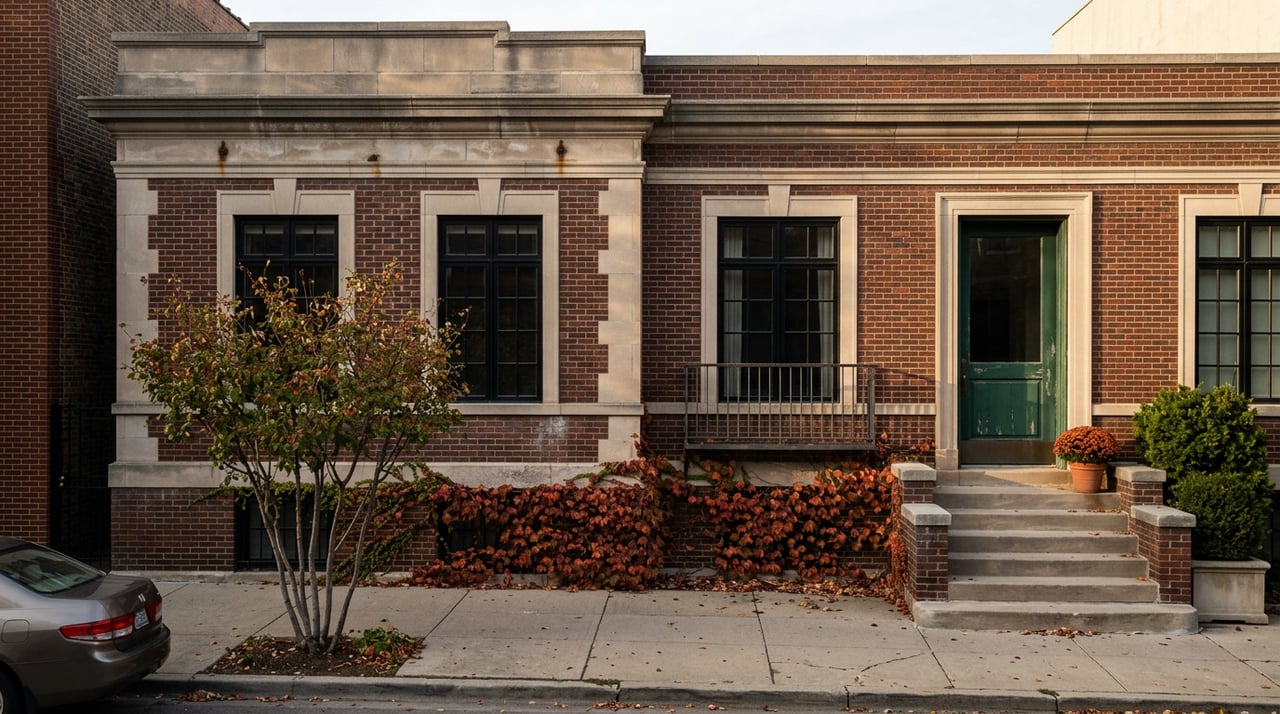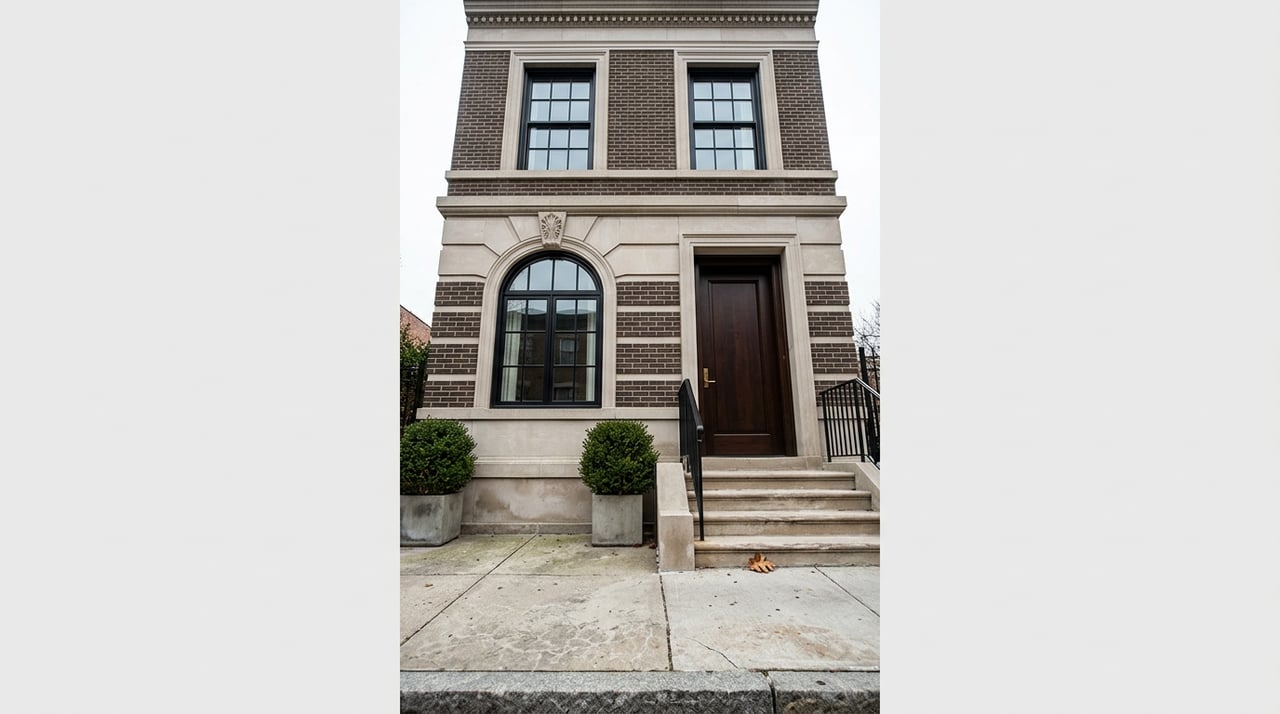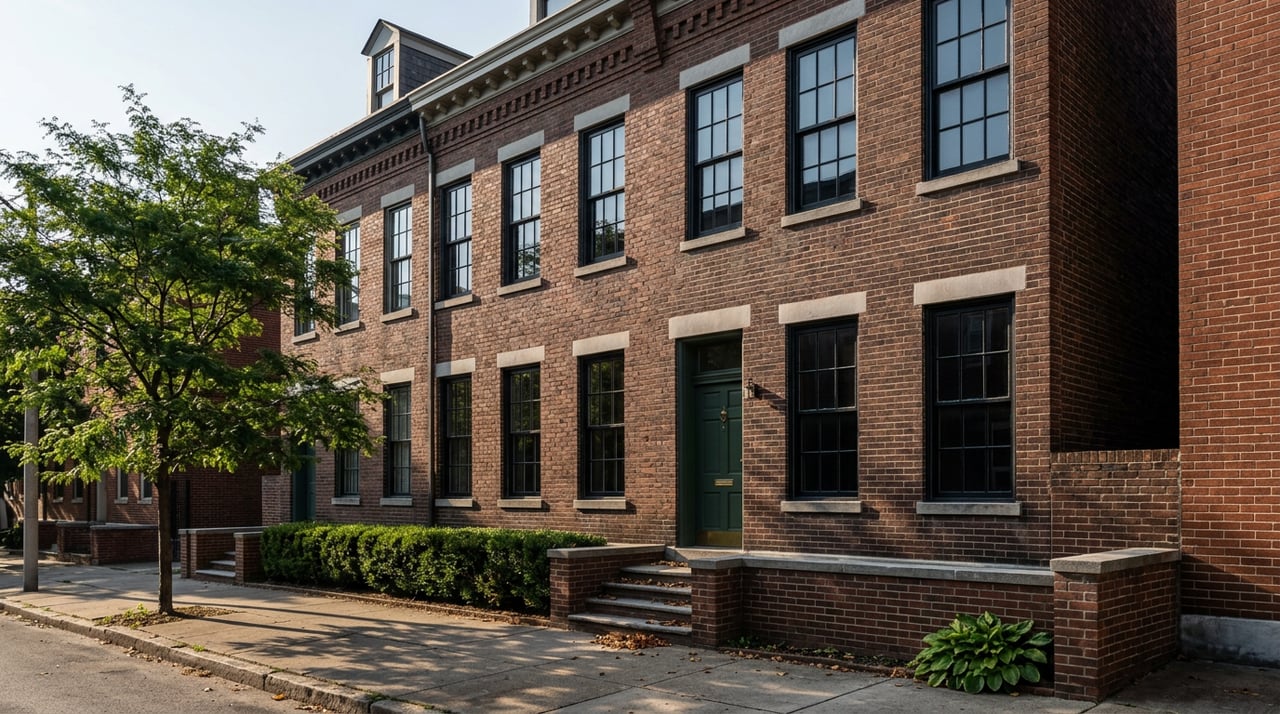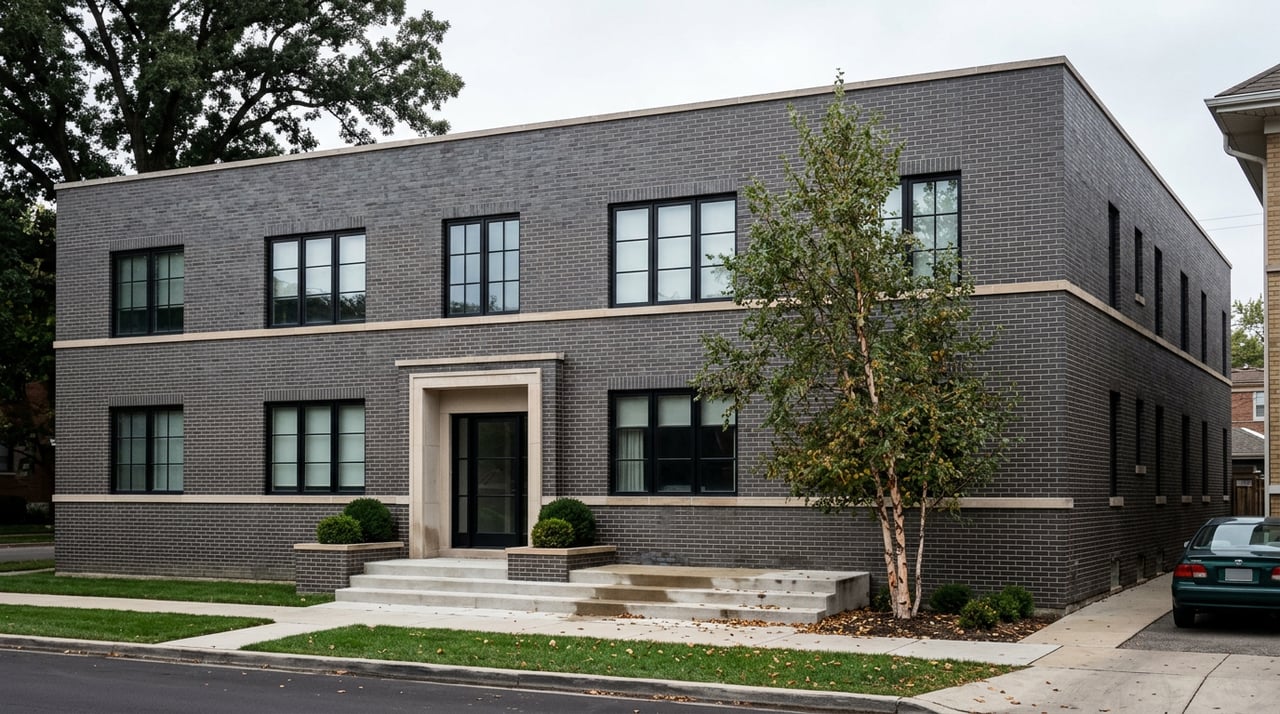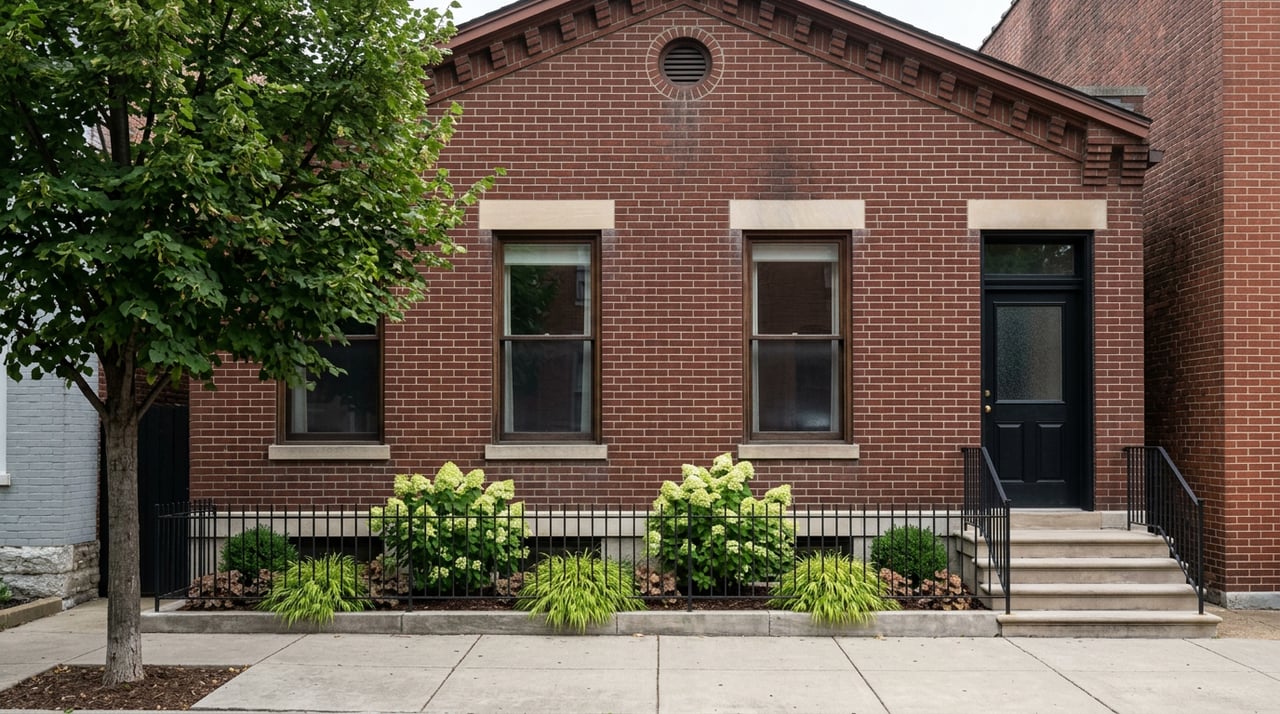
Two buyers walked into open houses one block apart last month. Both listings sat on Cortez Street. Both were 1898-vintage brick two-flats. Both were priced within $15,000 of each other. One buyer left with a renovation budget and a coach-house pro forma. The other left with a Commission on Chicago Landmarks permit checklist and a plan to preserve the front elevation exactly as it stood.
The addresses were separated by a boundary line most listing sheets never mention, and after April 1, 2026, that line matters more than it ever has.
The line most listings do not show you
Ukrainian Village has a headline median, and it dissolves the second you pull up the landmark district map. The Ukrainian Village Chicago Landmark District was designated December 4, 2002, with extensions added in 2005 and April 11, 2007. The original district centers on Haddon, Thomas, and Cortez between Damen and Leavitt, with portions of Damen, Hoyne, and Leavitt themselves inside.
Of the district's 254 buildings, roughly one third are finely-crafted brick worker's cottages built by William D. Kerfoot between 1886 and 1905, with high-quality brick two- and three-flats built between 1892 and 1904 making up the majority. The 2006 second extension added another 232 buildings, made up almost exclusively of two- and three-story brick flat buildings. Kerfoot developed roughly one in every three of the original 254.
If a listing sits inside those lines, the buyer inherits the review process the day they close. If it sits one lot outside, the buyer inherits a completely different set of options that just expanded citywide.
What the Commission actually reviews
Inside the district, exterior work that a permit application would normally hand straight to the Department of Buildings gets routed through Historic Preservation first. The city has adopted specific written policies for this district covering dormers and siding, published on the Chicago Landmarks publications page alongside the U.S. Secretary of the Interior's Standards for Rehabilitation.
For a buyer, the practical translation is short:
- Roof-line changes visible from the street get scrutinized against the dormer policy.
- Window replacement is a materials conversation, not a spec-sheet swap.
- Front-elevation masonry, cornices, and stoop details are the features the Commission is protecting.
- Front-yard excavations are not permitted in historic districts under Chicago's standards, which quietly kills a lot of English-basement conversion plans that assume a light well.
The upside inside the line is the Class L Property Tax Incentive for Landmark Rehabilitations, which can meaningfully change the twelve-year hold math on a two-flat that needs significant work.
Outside the district, April 1 rewrote the offer
The citywide accessory dwelling unit ordinance, SO2024-0008918, was passed 46-0 by City Council on September 25, 2025 and took effect April 1, 2026. In total, over 320,000 parcels are now eligible for ADUs, compared to the roughly 116,000 eligible under the pilot. The initial eligibility area now covers 29 percent of the city, up from 12 percent under the pilot.</cite index="53-19">
For a Ukrainian Village buyer, that reshapes what an outside-the-district two-flat or three-flat is actually worth. RT and RM multifamily zoning districts, plus B1, B2, B3, C1, and C2 mixed-use, now allow both conversion units (interior form, often a basement) and coach houses (detached in the rear) as-of-right.
The clearest local example is a block west of Damen on Augusta. Volo Holdings received an ADU permit to add a fourth residence to the three-unit building at 2114 West Augusta Boulevard, an 1908 property being rehabbed with a rear three-story addition designed by Hanna Architects. Reported costs for the three renovation permits total more than three-quarters of a million dollars, with the initial addition at $180,000, the ADU permit at $200,000, and the neighboring 2112 West Augusta rehab permit at $440,000. That is what an outside-the-district vintage building looks like when a buyer underwrites the ordinance instead of the median.
The two markets, side by side
| Diligence question | Inside the Landmark District | Outside the District |
|---|---|---|
| Front elevation changes | Landmarks review | Standard DOB permit |
| Dormer added to attic | Adopted Ukrainian Village Dormer Policy applies | Zoning and code only |
| Basement conversion unit | Permit review plus historic scrutiny; no front-yard excavation | ADU permitted as-of-right in RT/RM/B/C zoning |
| Coach house at alley | Practically constrained | Permitted with contractor apprenticeship condition |
| Tax treatment on rehab | Class L incentive available | Standard assessment |
| Resale story | Preservation premium on original detail | Density and cash-flow narrative |
The apprenticeship rule that makes coach houses fragile
The ordinance carries a labor condition most residential buyers have not encountered before. Any contractor who applies to build a coach house must first enroll in a federally recognized labor apprenticeship program, a requirement Chicago does not impose on any other type of housing construction, and at the time of passage no Chicago-based residential contractors were enrolled in a qualified apprenticeship program according to a U.S. Department of Labor database.
Basement conversion units do not carry that condition, which is a real reason the 2114 W. Augusta play went to the lower level rather than the alley. A buyer running a coach-house pro forma on an outside-the-district lot in the last week of July should assume a longer contractor search than the estimator on any spec sheet suggests.
Two more conditions matter for underwriting. Property owners adding two or more ADUs must maintain 50 percent of those new units as legally affordable, rented to tenants making 60 percent of the Area Median Income or less for a minimum of 30 years, and ADUs are prohibited from use as short-term rentals. A single basement conversion sidesteps the affordability trigger. A two-unit add does not.
What the numbers actually say
The neighborhood median that shows up on the portals does not distinguish between these two products, which is why it moves in ways that feel counterintuitive. In October 2025 the closed median in Ukrainian Village landed at $655,000, down 9.15 percent year over year, while price per square foot was $338, up 2.1 percent over the same window. That combination reads as smaller, more updated units clearing faster than larger vintage stock.
As of late July 2026, Redfin was showing 27 pending listings at a median list of $868,000 with 41 median days on market and roughly one offer per home. The gap between the pending list median and the trailing closed median is a size and product-mix story, not a bidding-war story. Inventory sits long enough for a diligent buyer to actually read the landmark map before writing an offer, which was not true in 2021 and 2022.
Writing the offer against the map
A workable diligence sequence for a Ukrainian Village property under contract:
- Pull the address on the Chicago landmarks district viewer and confirm whether it sits in the original 2002 district, the 2005 extension, the 2007 extension, or outside all three.
- If inside, request the seller's permit history and check whether any recent exterior work went through Historic Preservation. Unreviewed changes are a title-adjacent risk, not a cosmetic one.
- If inside and the plan involves an attic or dormer, read the adopted Ukrainian Village Dormer Policy before ordering an architect.
- If outside, pull the zoning district. RT-4, RM-5, and the mixed-use B and C districts unlock the ADU conversation. RS zoning outside the pilot area only qualifies where the alderperson has opted in.
- If outside and RT/RM, decide before the inspection whether the pro forma runs on one conversion unit or two. The 50 percent affordability trigger is a different underwriting exercise.
- If a coach house is central to the pro forma, interview contractors on their apprenticeship-program status before appraisal, not after.
- Ask the seller for the Cook County Assessor PIN and check for any active Class L designation on the property inside the district.
The order matters. Points one through three change what an appraiser will accept as comparable. Points four through six change the cap rate.
FAQ
Does landmark designation apply to interior renovations?
In landmark districts, exterior features visible from the public right-of-way are usually most sensitive, but permit applications for interior renovations may still require review and supporting documents depending on the scope. A kitchen refresh generally does not. Structural work that touches an exterior wall generally does.
If a property is outside the district but on a block that has not been opted in, can it still add an ADU?
Only if the underlying zoning is multifamily (RT or RM) or a qualifying mixed-use B or C district, which grant ADUs as-of-right citywide. RS single-family lots outside the original pilot areas require the alderperson to have opted the block in through a follow-on ordinance.
The offer you write in Ukrainian Village depends less on the median than on which side of a line drawn in 2002 the property sits on, and on whether the buyer has read the ordinance that changed on April 1. That is the diligence work that separates a clean close from a surprise at permit intake.
If you are weighing a Ukrainian Village purchase, a sale of a vintage two-flat, or an investor pro forma on a rear addition, the team at Vesta Preferred Realty can walk the address against the landmark map and the current zoning before you write the number. Get a Home Valuation to start the conversation with data specific to your block.