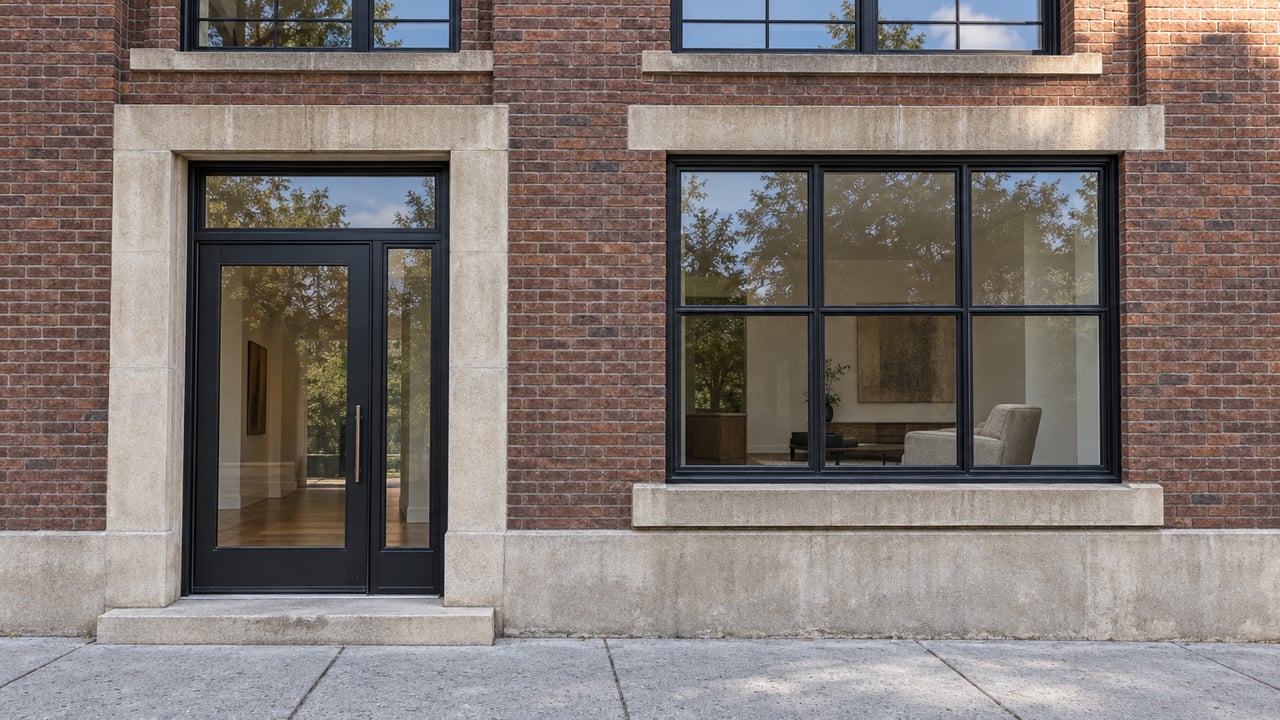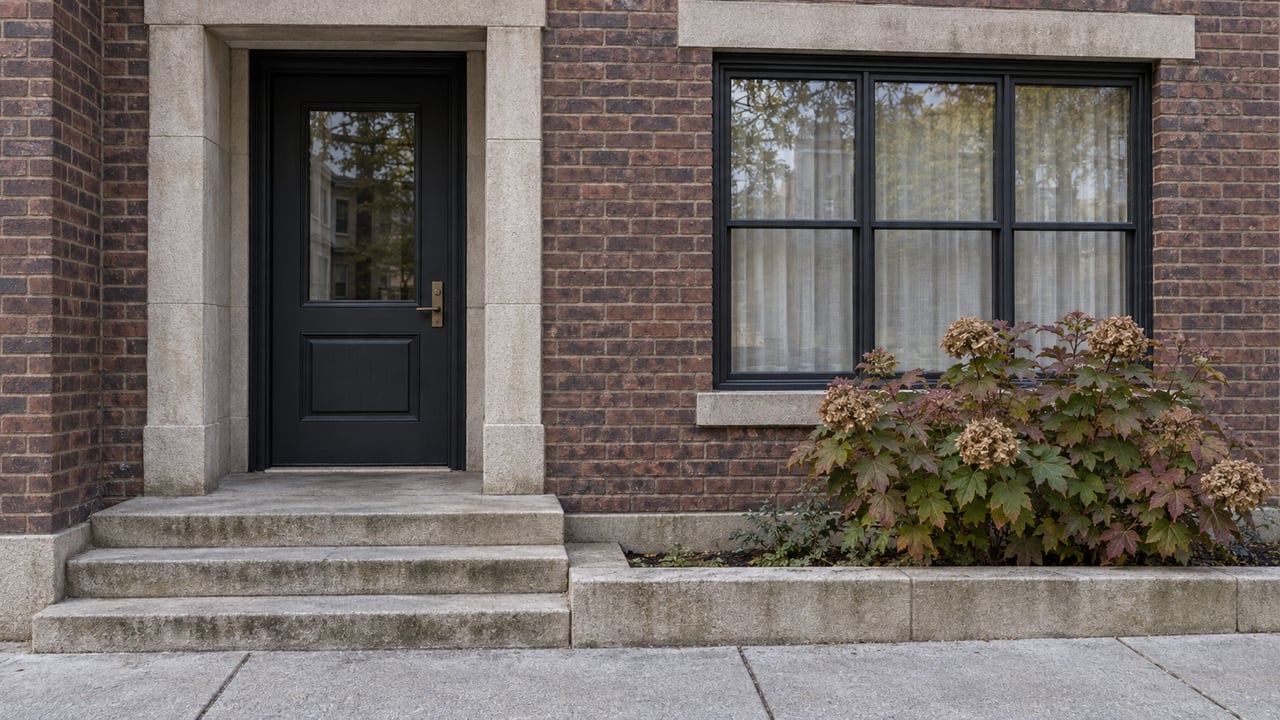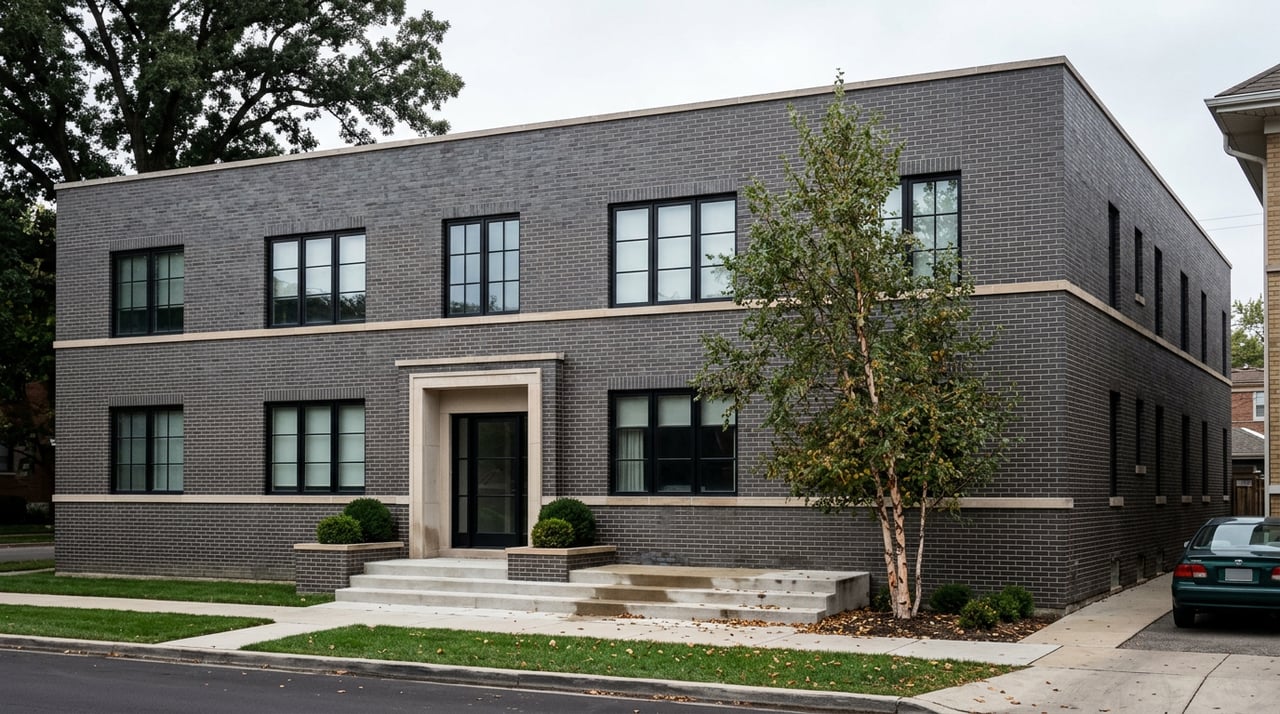
In June 2025, an LLC paid $410,000 for a wood-frame single-family house built in 1903 at 3320 West Dickens Avenue in Logan Square. A demolition permit followed, then approval for something else entirely: a two-story building with a basement and two dwelling units, rear terraces on both floors, a rooftop deck with a stair enclosure, and a three-car garage off the alley that gets its own roof deck. Hanna Architects drew it. PGC Development is building it.
Read as a straightforward real estate story, that's a teardown. Read against the ordinance Chicago passed specifically to protect Logan Square's two-flats, it's closer to the opposite of what most buyers assume is happening in the neighborhood right now.
If you've followed Logan Square real estate at all over the past two years, you've probably absorbed one version of the story: investors buying up old two-flats, gutting them into single-family homes, and the city stepping in to stop it. That part is true. In September 2024, City Council passed the Northwest Side Housing Preservation Ordinance, covering most of Logan Square along with Avondale and parts of Hermosa, West Town, and Humboldt Park. It raised the fee for demolishing a two-, three-, or four-flat to $20,000 per unit or $60,000 per building, whichever is higher, with proceeds funding the Chicago Housing Trust and the Here To Stay Land Trust. On blocks where most buildings are already multi-family, the ordinance went further and banned converting those buildings into single-family homes outright. The demolition surcharge's sunset was later pushed to December 31, 2029, so this isn't a short-term pilot anymore.
That's the half of the story everyone tells. It's not the half that explains 3320 West Dickens.
The Clause That Runs the Other Direction
Buried in the same legislation is a provision that gets far less attention: it legalized new two-flat construction by right on RS-3 zoned parcels within the ordinance's boundary, lots that were previously restricted to single-family homes only. That's the path used at 3320 West Dickens. Nobody needed a special zoning variance to swap a century-old frame house for a brand-new two-unit building with rooftop decks. The ordinance made that the default, not an exception you'd have to fight for.
So the phrase "two-flat" in a Logan Square listing right now covers two products moving in opposite directions at once. Existing two-flats on majority multi-family blocks are protected from becoming single-family homes, sometimes at the cost of that $60,000 surcharge if an owner tries anyway. Single-family lots on RS-3 blocks can become new two-flats without a fight. The neighborhood's multi-family stock isn't simply aging in place while the city defends it. Some of it is being replaced, block by block, with construction that looks nothing like what stood there before.
Two Buildings Called the Same Thing
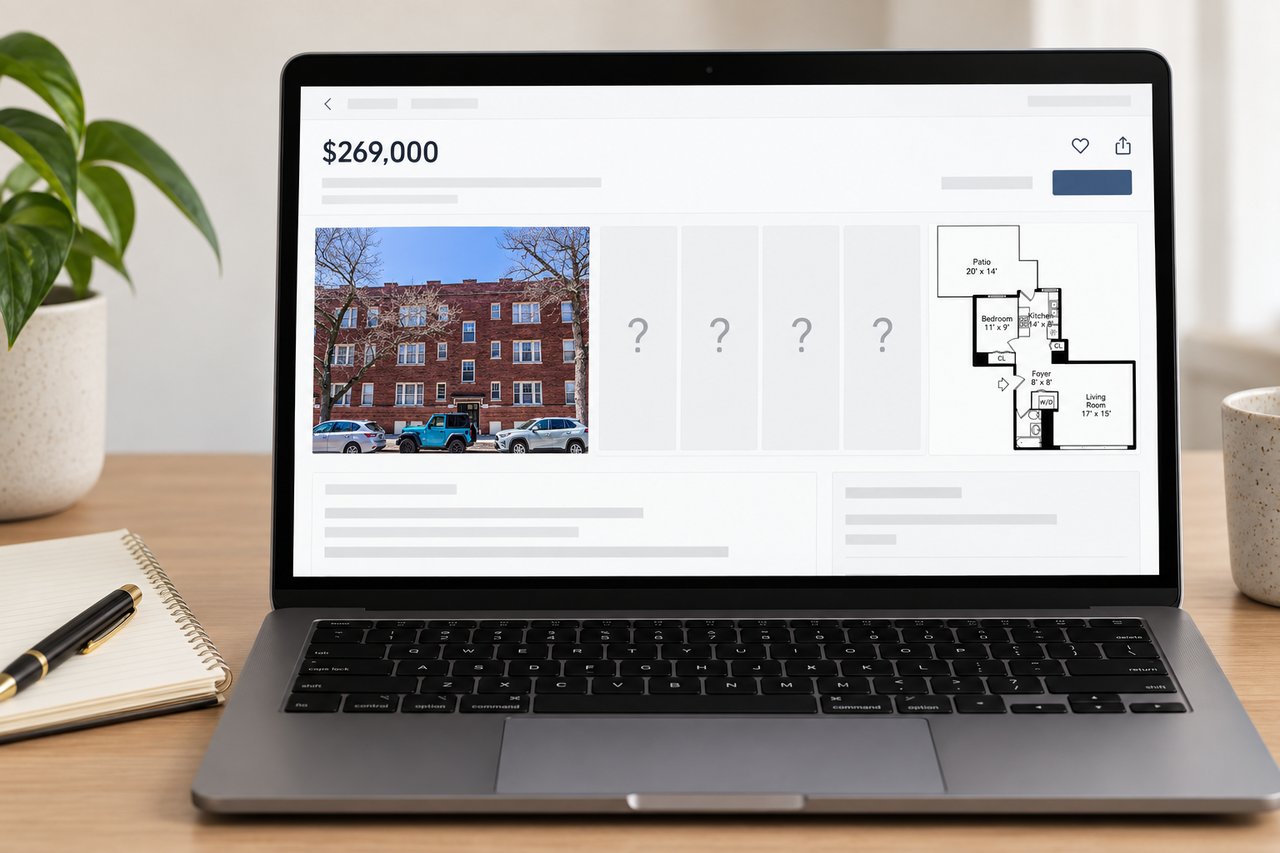
Multi-family listings in Logan Square as of July 2026 ranged from $440,000 to $1,825,000, with a median of $625,000 and an average sale price of $717,850. That's not a typo or a wide margin of error. It's two different products sharing one MLS category.
| Vintage two-flat | New-construction two-flat | |
|---|---|---|
| Typical build era | 1900s to 1920s, brick or frame | 2024 to present |
| Zoning status | Existing use, protected from single-family conversion on majority multi-family blocks | Built by right on former single-family RS-3 lots |
| Outdoor space | Small yard, maybe a deck added later | Rear terraces on each floor, rooftop deck, garage roof deck |
| Where it sits in the current price range | Toward the $440,000 end | Toward the $1,825,000 end |
| What a buyer is actually financing | An older structure with a capped rental ceiling and deferred-maintenance risk | New systems, higher achievable rents, a higher entry price |
A buyer comparing "Logan Square two-flats" without asking which one they're looking at is comparing two different assets that happen to share a zoning category.
Why Owners Aren't Just Converting Back
Chicago contractor pricing from earlier this year put full deconversion, turning a two-flat into a single unit, at $250,000 to $500,000, against $150,000 to $350,000 to renovate both units and keep the building intact. A landlord who deconverts also walks away from rental income the same pricing put at $2,200 to $2,500 a month for a renovated Logan Square two-bedroom unit, or roughly $26,400 to $30,000 a year. Stack the ordinance's demolition surcharge on top of that for anyone tearing a building down rather than converting it internally, and the math tilts hard toward leaving the second unit in place, or building a new structure that starts as two units to begin with, which is exactly the calculation playing out at 3320 West Dickens.
That doesn't mean the losses the ordinance targeted were imaginary. DePaul Institute for Housing Studies data show 9.8 percent of Logan Square's two-to-four-flats were lost to deconversion or new construction between 2013 and 2019, and blocks along the 606 lost close to 60 percent of their multi-family buildings over the five years ending in 2018, the pace that pushed aldermen to write the ordinance in the first place. The current mix of protected old stock and newly built two-flats is the market's adjustment to that incentive structure, not proof the ordinance failed to do anything.
What the Median Doesn't Sort Out for You
Ask three sources what a home costs in Logan Square this year and you'll get three different numbers, and none of them are wrong. One widely used home-value estimate put the typical Logan Square home at roughly $445,000 as of a June 2026 read, down slightly from a year earlier. A separate tally of actual closed sales over the three months ending in May 2026 put the median at $730,000, up more than 12 percent from the same period a year before, with homes selling in 36 days instead of 45. Multi-family listings specifically carried that $625,000 median mentioned above, as of July 2026.
These aren't competing claims about the same market. They're measuring different slices of a neighborhood actively splitting into old two-flats, new two-flats, condos, and single-family homes, each moving on its own timeline. When the answer to "what does a two-flat cost here" depends this much on which two-flat you mean, the useful move is to stop asking for the median and start asking which product a specific listing actually is.
Before You Write an Offer on a Logan Square Two-Flat
- Check the build year against 2024. A two-flat built after the ordinance passed was constructed under different rules and different cost assumptions than one built a century earlier.
- Ask whether the block is majority multi-family. That single fact determines whether a future owner could legally deconvert the building or whether the option is closed off entirely.
- Confirm the lot's zoning. RS-3 parcels within the ordinance boundary can support new two-flat construction by right, which matters if you're evaluating a teardown candidate rather than a finished building.
- Compare any in-place rents to the neighborhood's $2,200 to $2,500 range for a renovated two-bedroom unit rather than a citywide average, since that number drives the deconversion-versus-keep-it math on either side of a purchase.
Where This Fits If You're Weighing Logan Square Against the Rest of the North Side
Buyers priced out of Lincoln Park or Bucktown keep landing in Logan Square and the corridor around it, part of why demand here hasn't slowed even as the neighborhood locks down more of its older housing stock. Early in 2026, the city expanded the Logan Square Boulevards District, adding 111 historic properties to protected status, around the same stretch of time a six-story, 50-unit building with ground-floor retail cleared its final building and caisson permits a few blocks away at 2240 North Milwaukee Avenue. Both things are true at once. The neighborhood is preserving some of its oldest buildings while adding new density nearby, and that same two-track pattern is what's showing up at the scale of an individual two-flat listing.
For a buyer, that means Logan Square isn't one market with one number attached to it. It's an old neighborhood and a new one sharing a zip code, and the ordinance written to protect the first is, by its own design, helping build the second.
FAQ
Is it legal to convert a two-flat into a single-family home in Logan Square? It depends on the block. Under the Northwest Side Housing Preservation Ordinance, converting a two-, three-, or four-flat into a single-family home is prohibited on blocks where most existing buildings are already multi-family. Outside those blocks, a conversion may still be possible, though a full teardown would still trigger the demolition surcharge.
What is the demolition surcharge and who pays it? Anyone demolishing a two- to four-unit residential building within the ordinance's boundary, which covers most of Logan Square along with Avondale and parts of Hermosa, West Town, and Humboldt Park, owes $20,000 per unit or $60,000 per building, whichever is higher. The funds go to the Chicago Housing Trust and the Here To Stay Land Trust.
Can a single-family lot in Logan Square be redeveloped into a two-flat? In many cases, yes. The same ordinance legalized two-flat construction by right on RS-3 zoned parcels within its boundary, land that previously allowed only single-family homes. That's the zoning path behind the new two-unit building now under construction at 3320 West Dickens Avenue.
A listing that says "two-flat" in Logan Square doesn't tell you which market you're actually buying into until someone checks the permit history, the zoning, and the block. That's the kind of read that changes an offer, not just a search filter. If you're comparing Logan Square to another North Side neighborhood or trying to figure out what a specific building is really worth, Vesta Preferred Realty can walk the block with you before you write anything. Start with a Get a Home Valuation request and we'll tell you which side of this market your address sits on.
This article is general information, not legal, tax or financial advice. Consult a qualified professional about your situation.