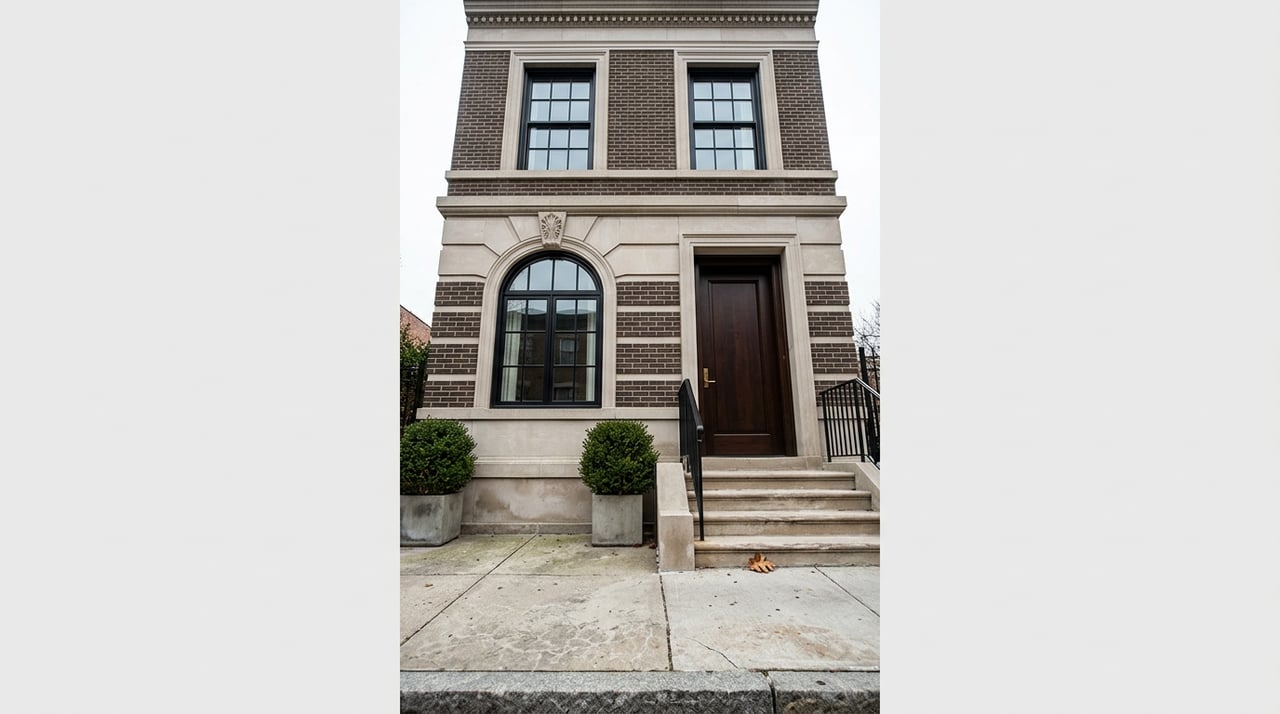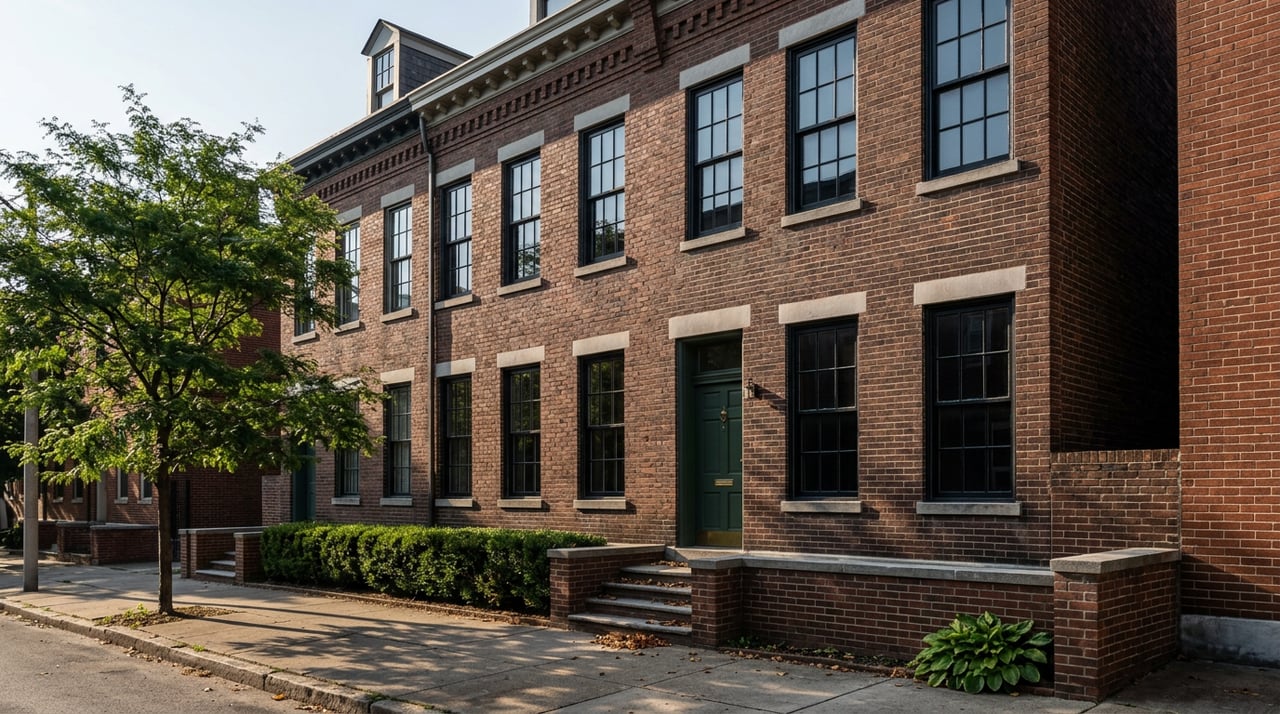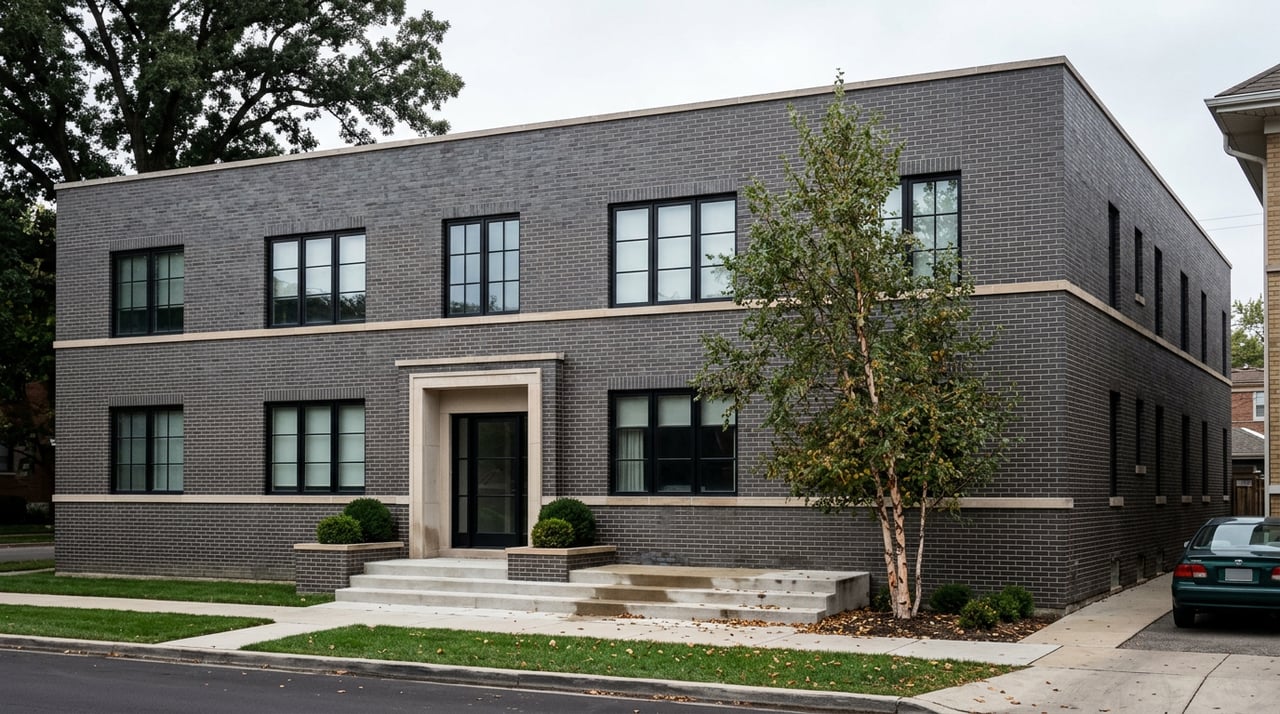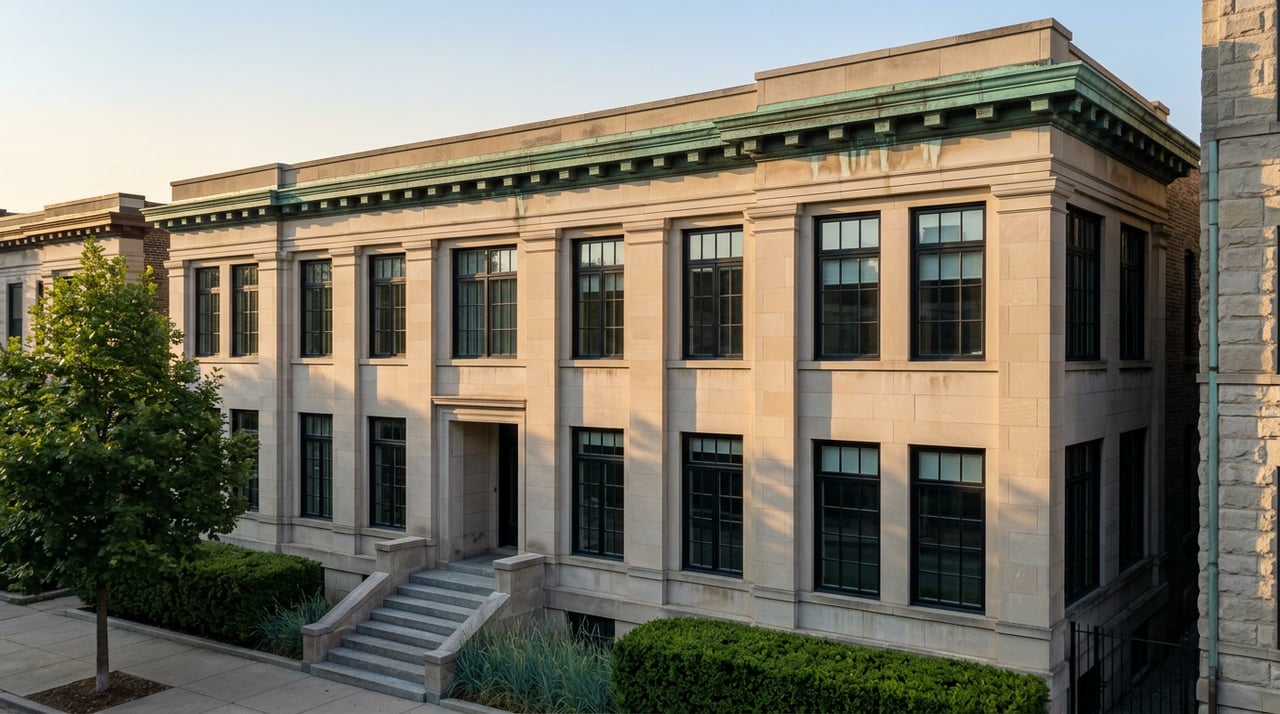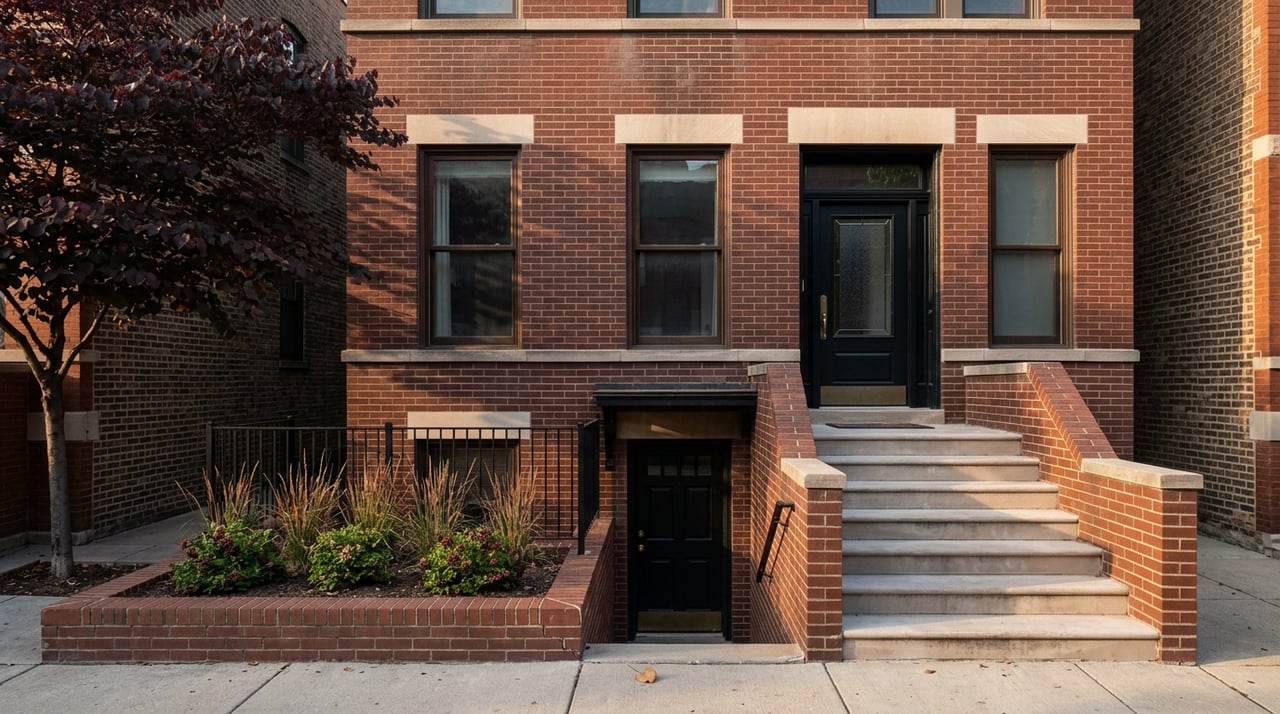
For decades, the below-grade unit tucked under a Lakeview two-flat was worth less than nothing on paper. It showed up in listings as "finished basement" or "storage," even on buildings where a tenant lived there year-round and paid rent every month, because building it in the first place had been illegal since 1957. On April 1, 2026, that changed. Chicago's new accessory dwelling unit ordinance made it possible, across most of the neighborhood, to legally build or formalize that unit for the first time in almost seventy years.
The coverage that followed treated this as good news for anyone who owns a vintage multi-unit building in Chicago. It is, but not evenly. Buried in the ordinance is a single requirement that decides who can actually use it right now, and it has nothing to do with zoning, cost, or contractor availability. It comes down to whether you live in the building.
Why Lakeview got here before most of the city
Chicago's ADU program started as a small pilot in 2021, covering five test zones and roughly 12 percent of the city. The ordinance that took effect on April 1, 2026 replaced that pilot with a permanent, citywide program, expanding eligible land to roughly 60 percent of Chicago and more than doubling the number of eligible parcels to over 320,000, according to the City of Chicago's own announcement.
The alderman who led that fight for seven years represents Lakeview. Ald. Bennett Lawson (44th Ward) introduced the original citywide legalization proposal in 2023 and eventually negotiated the compromise version that passed City Council 46 to 0 in September 2025, as Block Club Chicago reported on the day permits went live. That matters for more than local pride. In single-family zoning districts elsewhere in the city, individual alderpeople have to opt their wards in block by block, and many have not. Lakeview's multi-unit blocks skip that step entirely. The ordinance allows ADUs by right in RT and RM zoning districts, the classifications that cover most of the neighborhood's two-flats, three-flats, and courtyard six-flats, without requiring any alderman's signature.
A coach house built for a Lakeview family is already one of the program's reference cases. Architect Katherine Darnstadt of Latent Design designed a detached unit for a client expecting a first child, intended for a parent to move in and help with childcare, a project that ran under the original pilot rules before the citywide expansion even took effect.
The line that decides who benefits
Here is the requirement most explainers skip past. The ordinance requires owner-occupancy on any property with two or fewer existing units before an ADU can be added. A single-family home or a classic two-flat needs an owner living on site to build or legalize a basement unit or coach house. A three-flat or larger building does not carry that requirement at all.
There is a second, separate trigger tied to affordability, not occupancy. If an owner adds two or more new ADUs to a property, half of those new units must be rented to tenants earning 60 percent of the area median income or less, for a minimum of 30 years. Adding a single unit, which is what most two-flat and three-flat owners in Lakeview are actually contemplating, does not trigger that requirement at all.
Laid out side by side, the two rules produce a genuinely uneven landscape:
| Existing building | Owner-occupancy required for 1 new ADU? | Affordability rule triggered? |
|---|---|---|
| Single-family home or 2-flat | Yes | No |
| 3-flat or courtyard building (3+ units) | No | No |
| Any building, adding 2+ new units | Depends on above | Yes, 50% must be affordable at 60% AMI for 30 years |
The practical effect is that an owner-occupant living in one unit of a Lakeview greystone two-flat has the cleanest path in the entire program. They can legalize an existing garden unit or build a new one, keep 100 percent of the rent, and never touch the affordability rule, because they are only adding one unit. An investor who owns that same two-flat as a pure rental property, with no unit occupied by an owner, cannot use the program at all under current rules, regardless of how much equity or ambition they bring to the project.
Why this cuts differently across Lakeview's own housing stock
This is where the ordinance's fine print stops being an abstract policy detail and starts changing actual math for actual sellers. Lakeview's building stock is not one thing. It runs from owner-occupied greystone two-flats built in the 1890s through 1930s, many with English basements that were already informally used as extra living space, to fully rented three-flats and six-flat courtyard buildings held as investment property.
An owner-occupied two-flat with an existing but unpermitted garden unit is the ordinance's best case. That owner can pursue legalization now, add a legitimate third income stream, and do it without hiring for two units, which would trip the affordability requirement.
A three-flat or larger courtyard building, ironically, has an easier occupancy path than a plain two-flat, since the owner-occupancy rule only applies to buildings starting at two units or fewer. An investor who owns a six-flat can add a single ADU without living there and without hitting the affordability trigger, since one new unit stays under the two-unit threshold that requires the affordable set-aside.
The group left out in the cold, at least for now, is the absentee owner of a two-flat, which describes a meaningful share of Lakeview's small multi-unit inventory. That owner cannot add or legalize a unit without occupying the property themselves, at least under the rules as written.
What it actually costs, and what it returns
For the owners who do qualify, the numbers are specific enough to plan around. Interior basement conversions in Chicago's two-flat and three-flat stock typically run $65,000 to $120,000, or roughly $130 to $250 per square foot, covering a full kitchen, bathroom, separate entrance, egress windows, and waterproofing. Coach houses in backyards run higher, and any contractor building one is required to participate in a registered apprenticeship program, a labor rule that applies specifically to detached coach houses and adds cost that interior conversions do not carry. City permit review for either type runs 60 to 90 days, with fees between $2,800 and $4,500. ADUs of either kind are barred from short-term rental use citywide, so the return has to work as a long-term lease.
On the rent side, Chicago ADU units typically lease for $1,450 to $1,950 a month for a one-bedroom and $1,850 to $2,600 for a two-bedroom. Against a $65,000 to $120,000 build cost, that is the kind of return that changes how a two-flat prices when it eventually sells.
That matters more in Lakeview than in a lot of Chicago neighborhoods because the underlying values are already high and vary block by block. As of March 2026, the median sale price across Lake View sat at $520,000, with price per square foot up roughly 3 percent year over year. West Lakeview, closer to Southport, traded at a median of $675,000 over the same window, while Lake View East, nearer the lakefront's denser vintage stock, came in around $327,000. Well-maintained two- and three-flats in the neighborhood have generally traded on cap rates in the 4 to 6 percent range. A legally added unit does not just add rent. It adds a documented income stream that an appraiser and a lender can both underwrite, which is a different asset than an informal basement apartment ever was.
The timing problem for sellers
If you own a Lakeview two-flat as a rental property, with no owner-occupant on site, and there is an existing basement unit that has never been on the city's books, the ordinance does not hand you a fast legalization path before you list. The owner-occupancy requirement means you would need to move into the building yourself to pursue the permit, which is not realistic for most investment owners with a sale already in mind.
The more honest move in that position is to price and disclose the building for what it legally is today, a two-unit property, rather than marketing phantom third-unit income that cannot yet be verified through a lender's file. A buyer who plans to occupy the building themselves can pursue legalization after closing, and a well-documented existing basement space, even unpermitted, is a real selling point to that specific kind of buyer. Overstating it as already-legal income, though, is the kind of detail that surfaces during appraisal and can slow or unravel a deal at exactly the wrong moment.
A few questions worth asking before you assume yes
Does this apply to condo buildings? The ordinance is a zoning change, not a change to the Illinois Condominium Property Act. A condo association's bylaws and its own governance rules still control what an individual owner can do to shared or below-grade space, separate from whatever the city's zoning code now permits.
What if I'm not sure of my building's zoning? Most of Lakeview's two-flat, three-flat, and courtyard blocks fall under RT or RM zoning, which qualifies by right under the new ordinance without needing an alderman's opt-in. Confirming your specific parcel's zoning designation before assuming eligibility is still worth doing, since block-level exceptions exist across the city.
How fast could a unit actually be ready? Permit review alone runs 60 to 90 days once an application is filed, before construction begins, so an owner planning to list a legalized unit this year needs to start the process well ahead of any target closing date.
Whether you are sitting on a two-flat you already live in, a three-flat you have held as a rental for years, or you are trying to figure out what a Lakeview property with an unpermitted basement unit is actually worth before you list it, the right first step is an honest read on where your specific building falls in this new set of rules. Vesta Preferred Realty works Lakeview's two-flat and courtyard building stock every week. Get a home valuation and we will walk through what your building's unit count, occupancy status, and zoning actually mean for what you can do next.