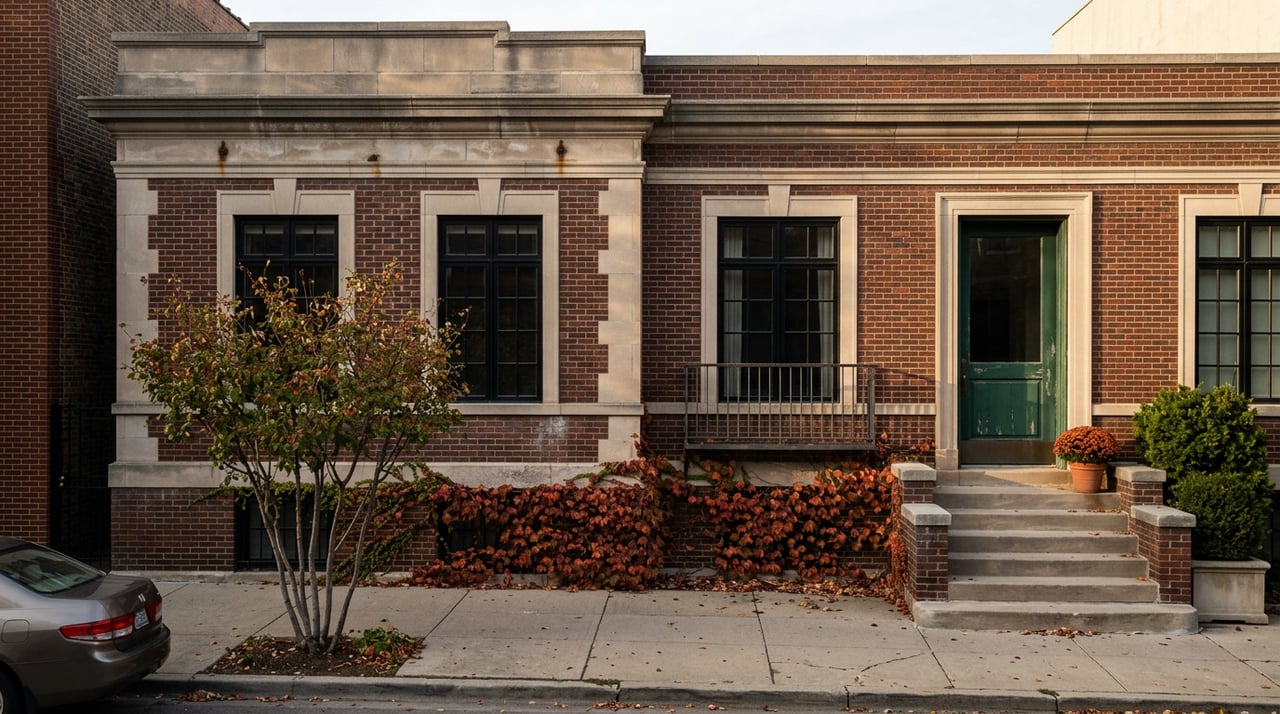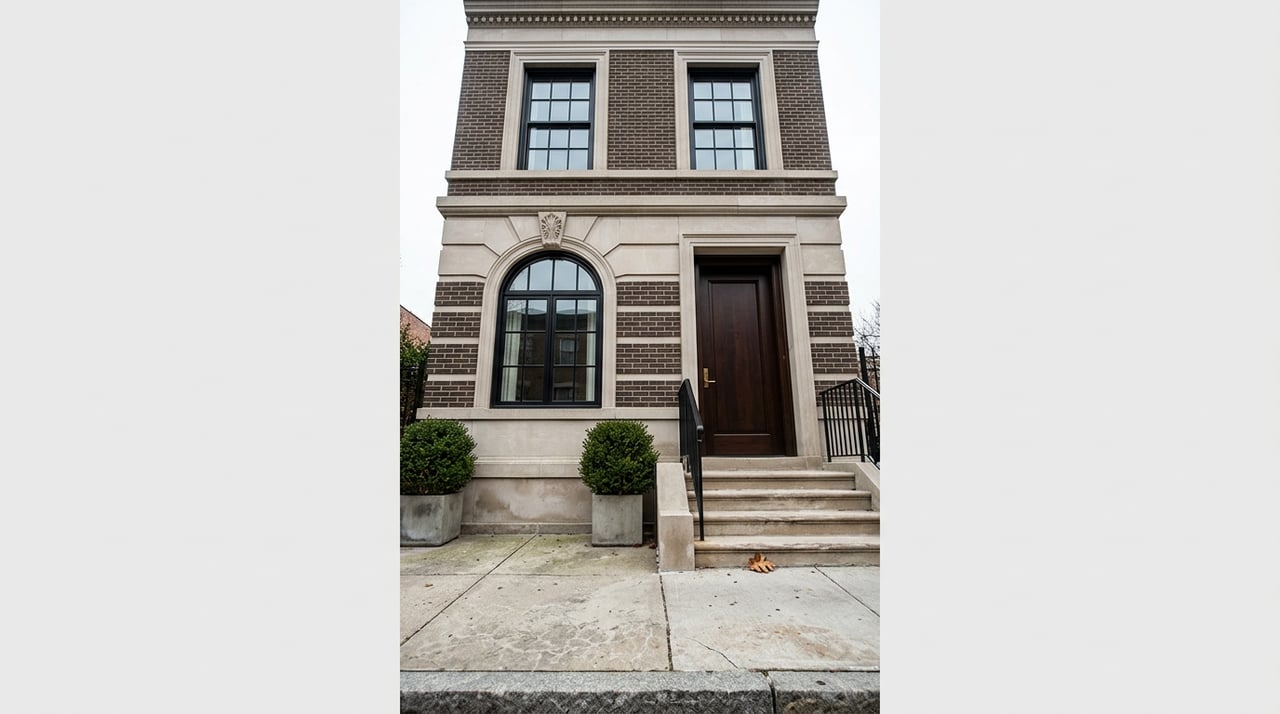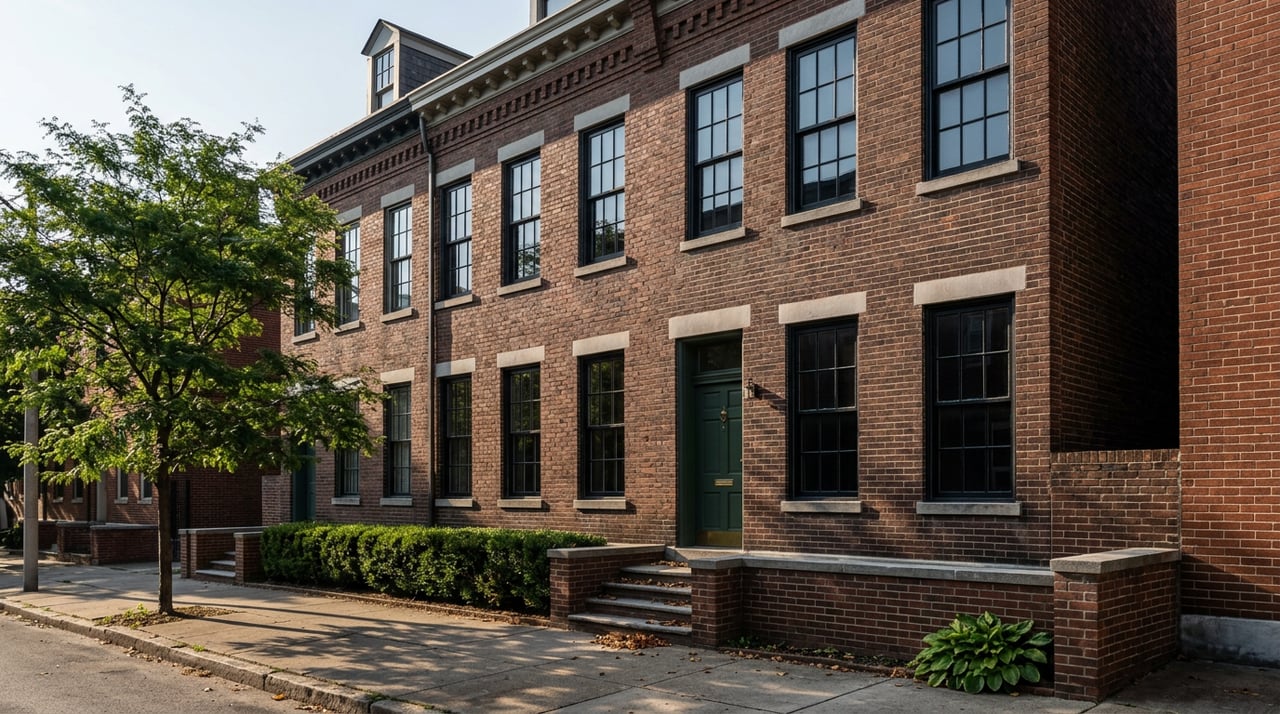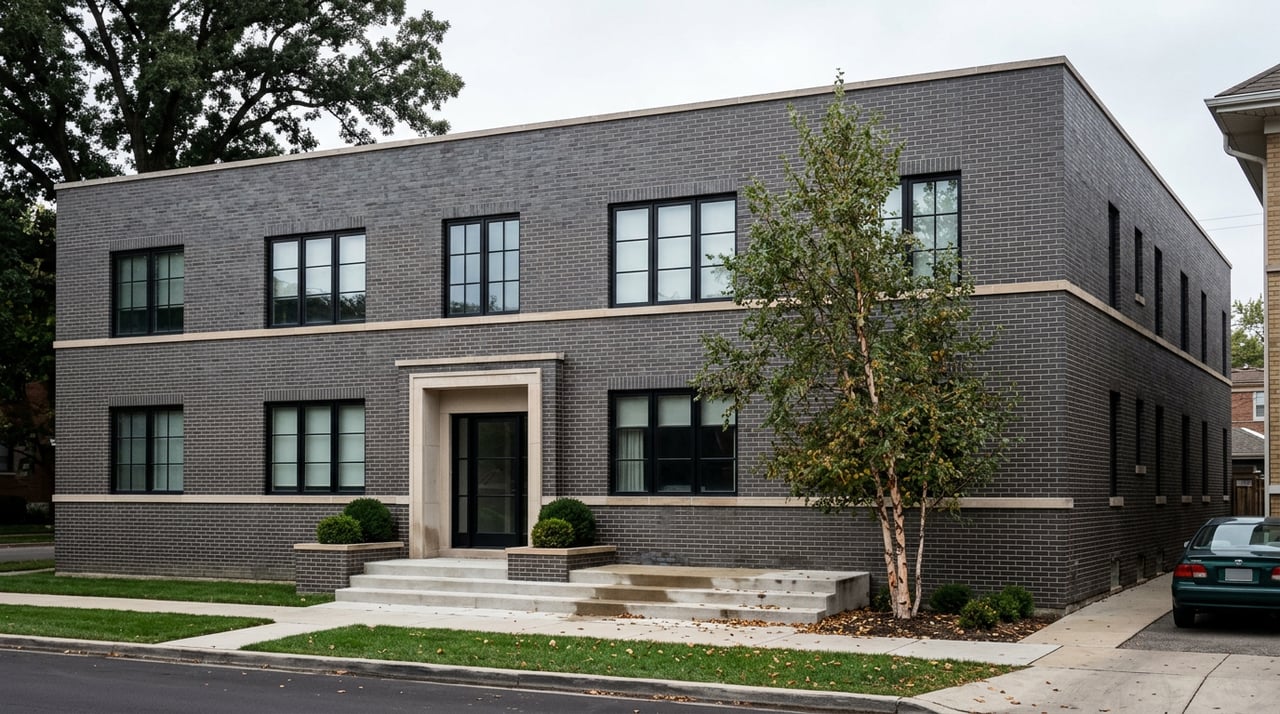
You are in attorney review on a Lincoln Park greystone conversion or a walk-up condo off Armitage. The seller's Section 22.1 packet arrives. Somewhere in it, in a board minute or a listing remark, is the phrase you were hoping to see: recently tuckpointed.
That phrase should slow you down, not speed you up. In this neighborhood, on this building stock, "recently tuckpointed" is one of the more expensive sentences an unrepresented buyer can read past.
Why that phrase is not the comfort it sounds like
Mortar on pre-1920 Chicago buildings was mixed with lime, not portland cement. Lime is softer than the brick around it and acts as a sacrificial buffer, absorbing movement and moisture so the brick face does not crack. Portland cement, the modern default, is harder than the brick itself. When a prior owner or an underbid contractor patches soft lime joints with portland, the wall traps moisture behind a rigid seal, and the brick face spalls off from the inside out. North Shore Masonry describes this exact mismatch as one of the most common problems they find on greystones in Lincoln Park and Logan Square, and the fix is removing the cement patches completely and repointing with a proper lime match.
That is why a note about recent tuckpointing on a pre-war building is a question, not an answer. The question is: what mortar, matched how, and inspected by whom. Nothing in the standard Section 22.1 disclosure requires the association to tell you.
What Section 22.1 does and does not do
Illinois requires the seller to give you a Section 22.1 package covering assessment history, reserves, pending litigation, insurance, and delinquencies. It is the backbone of your contingency-period read. It is also silent on almost every question you actually need answered on a masonry building.
Before your attorney signs off, ask the listing side for:
- The current-year budget and the prior two years
- The most recent reserve study (not just the reserve balance, the study itself)
- The last twenty-four months of board minutes
- Any engineer's or masonry inspection reports commissioned by the board
- Bids or scopes of work for any capital project under discussion
- The estoppel or paid assessment letter, requested again before closing to confirm final numbers
Two of those items do not exist in most small Lincoln Park associations. Many six-flats and twelve-unit conversions have never commissioned a reserve study, and most have never paid an engineer to look at the facade. That absence is itself the finding.
A serviceable rule of thumb from askdoss.com's 2026 Chicago condo guide is that a healthy building puts 20 to 30 percent of assessments into reserves and refreshes its reserve study inside a five-year window. If the building you are buying into is at 5 percent to reserves and has never had a study, price the deferred maintenance yourself before you waive.
The 115% ceiling and why it changes the shape of your risk
Under Section 18(a)(8) of the Illinois Condominium Property Act, a condo board can adopt a special assessment without a unit-owner vote as long as it does not exceed 115 percent of the sum of the prior year's regular and special assessments combined. First Community Management summarizes the mechanic plainly: above that threshold, owner approval kicks in.
For a buyer, that is not trivia. It tells you two things.
First, in a building where dues are artificially low, the 115 percent that a board can levy unilaterally is also low, which means a real capital project on a real greystone facade almost always requires an owner vote. That vote is where deals die and neighbors sue.
Second, the size of the number that clears without a vote scales with dues, not with the building's actual needs. A twelve-unit walk-up collecting $250 a month can absorb roughly $40,000 in year-two board-authorized assessments. A full masonry restoration on a 1902 greystone can be a multiple of that. When the disclosure shows steady, moderate special assessments year over year, that pattern often means the board is stacking work under the ceiling rather than confronting the reserve gap.
The illustrative math from Ron Ehlers's Chicago condo guide is worth carrying in your head: a $600,000 building-wide assessment at a 1.25 percent ownership percentage is $7,500 to the unit. Verify your exact percentage from the declaration before you make the offer, not after.
The landmark overlay: five Lincoln Park pockets where the timeline gets longer
Chicago requires a permit for tuckpointing, and the Easy Permit Program turns most projects around same-day. Landmark designation does not. Buildings inside a Chicago landmark district must have their mortar color, joint profile, and replacement brick reviewed by the Commission on Chicago Landmarks, which adds four to twelve weeks to pre-construction.
Lincoln Park has five active designations relevant to condo buyers:
| District or landmark | What it covers | Buyer implication |
|---|---|---|
| McCormick Row Houses | 19th-century rowhouse row near Fullerton and Belden | Any facade work goes through Commission review |
| Armitage-Halsted Commercial District | Armitage between Halsted and Racine; Halsted between Armitage and Webster | Mixed-use buildings with upper-floor condos are captured |
| 2100 block of Fremont, west side | Individually designated blockfront | Landmark review on residential tuckpointing |
| 2100 block of Bissell | Individually designated blockfront | Same review path |
| Halsted-Willow Group | Four Italianate and Queen Anne mixed-use buildings at Halsted and Willow, designated August 2021 | Newest overlay; sellers may not yet flag it in disclosures |
If your target unit sits inside one of those boundaries, add roughly two months to any masonry project the board discusses, and add that delay to your carrying-cost assumption if you are financing an assessment. Lenders review project health as part of underwriting, and Ron Ehlers's Chicago summary notes that large or imminent assessments can affect approval, with many lenders refusing to let a buyer roll assessment payments into the mortgage itself.
The facade ordinance gap most walk-up buyers miss
Chicago's Facade Ordinance, codified in Chapter 14-12 of the building code, is the reason downtown high-rises get inspected on a regular cycle by a licensed structural engineer or architect. It applies only to buildings 80 feet or taller, roughly seven to eight stories, per Thornton Tomasetti's summary of the ordinance.
Almost no residential building in Lincoln Park hits that threshold. The three and four-story walk-ups that make up the neighborhood's condo stock are, from a mandated-inspection standpoint, on their own. There is no city-required engineer's report on file. There is no scheduled critical examination that a buyer can request. The discipline of an outside professional walking the facade exists only if the association chose to pay for it, and most have not.
That gap is the reason your contingency period matters more here than in a South Loop or Streeterville high-rise. In those buildings, a filed critical examination report is a public artifact. In a Lincoln Park greystone conversion, the analogous document is one the buyer commissions or does not.
A contingency-week playbook
- Read the Section 22.1 for the specific words tuckpointing, lintel, parapet, facade, roof, and porch. Note the date next to each.
- If the packet mentions recent masonry work, ask for the invoice or contractor name. Cross-check whether the mortar spec is called out.
- Pull the last twenty-four months of board minutes and search for the same terms plus engineer, reserve study, and assessment.
- Check the property against the Commission on Chicago Landmarks district maps for the five designations above.
- If the building is small and pre-1920 and there is no engineer's report, price a private masonry walk-through into your inspection budget. Two hours of a mason's time is cheap information.
- Confirm your unit's ownership percentage in the declaration and multiply it by the largest plausible project number you can identify in the minutes. That is your worst-plausible number.
- Have your attorney request an updated estoppel letter within a week of closing.
FAQ
Does a low HOA fee mean the building is a bargain? Usually the opposite. Artificially low monthly dues starve the reserve fund, and because the 115 percent ceiling in Section 18(a)(8) is calculated off those same low dues, the board also loses the ability to catch up quickly without an owner vote. Low dues are a diligence flag, not a selling point.
If the seller shows me a recent tuckpointing invoice, am I safe? You are better off than with no invoice, but the invoice needs to specify mortar type on any pre-1920 building. A portland-over-lime patch job documented on paper is still a portland-over-lime patch job on the wall.
Can I make my offer contingent on a reserve study the building has never done? You can ask, and in a slow week you may get it. The more common move is to make attorney review contingent on receipt and satisfactory review of specific documents, including an engineer's letter you commission, and to negotiate a credit if the picture that emerges is worse than the listing implied.
Lincoln Park's vintage condo stock is one of the most rewarding pieces of Chicago residential real estate to own and one of the most document-heavy to buy. If you want a team that reads the 22.1, the minutes, and the mortar joint before you waive, Vesta Preferred Realty can walk the building with you. Get a Home Valuation to start the conversation on either side of the transaction.