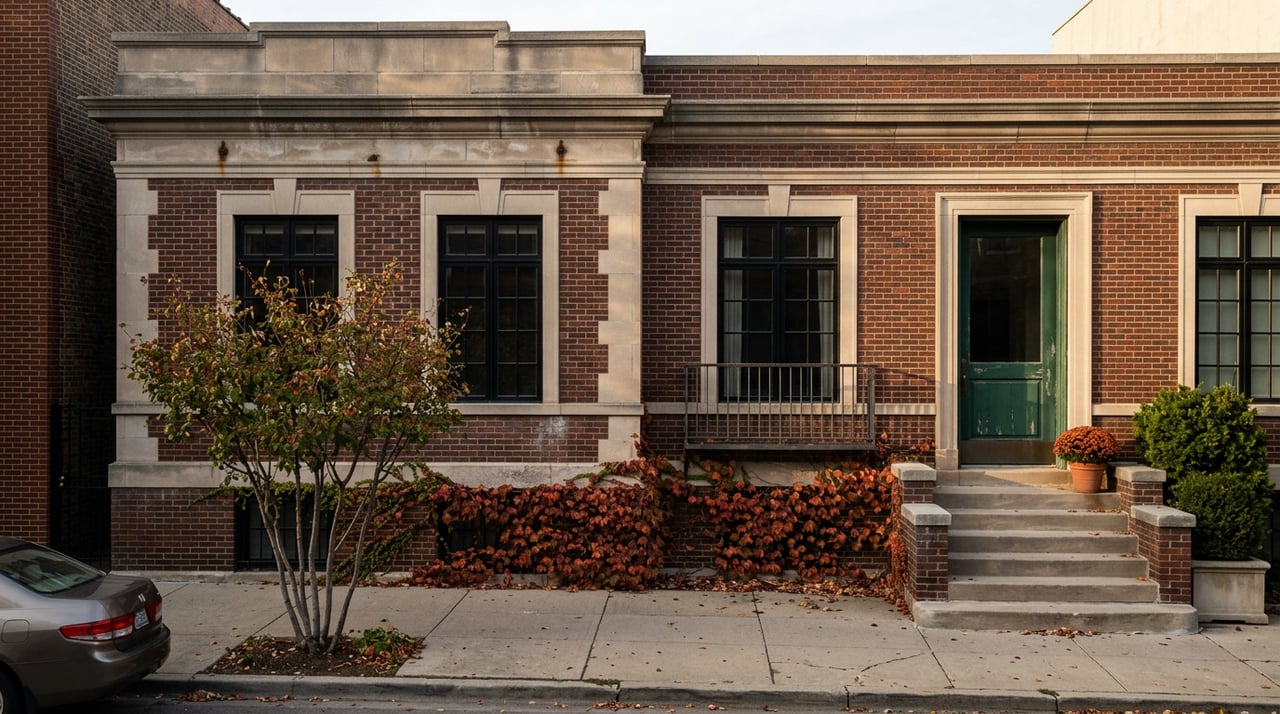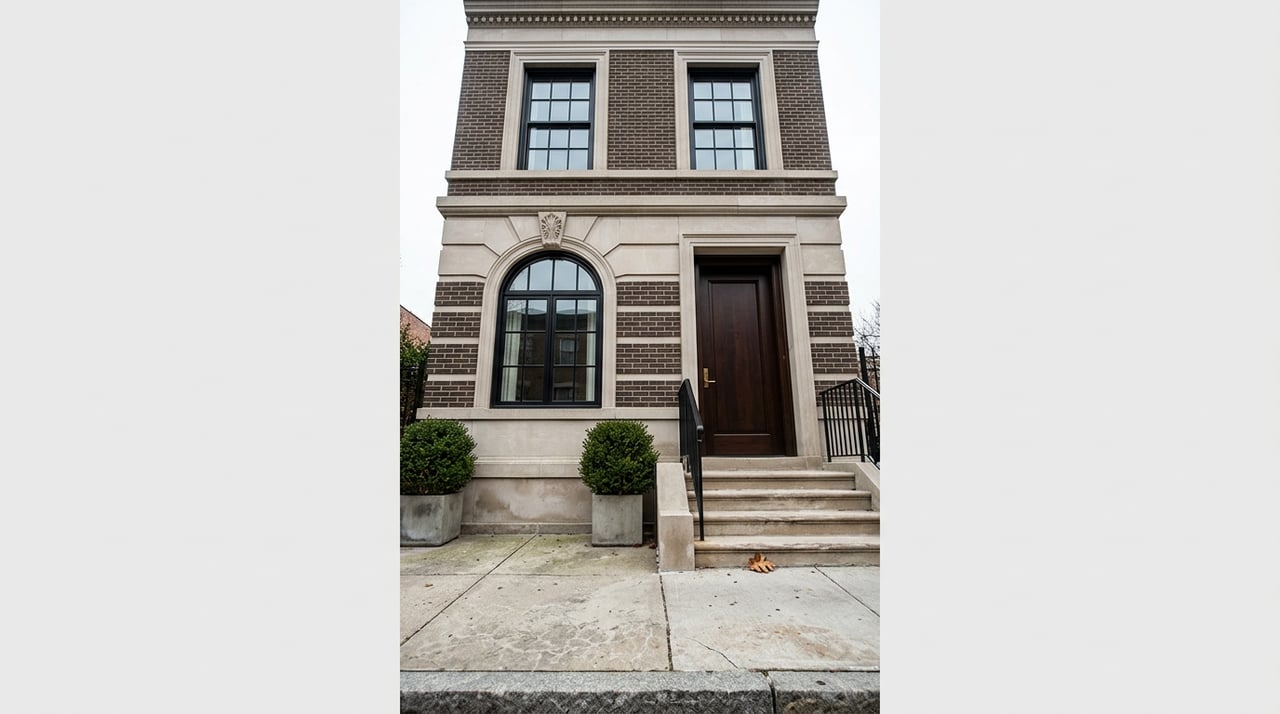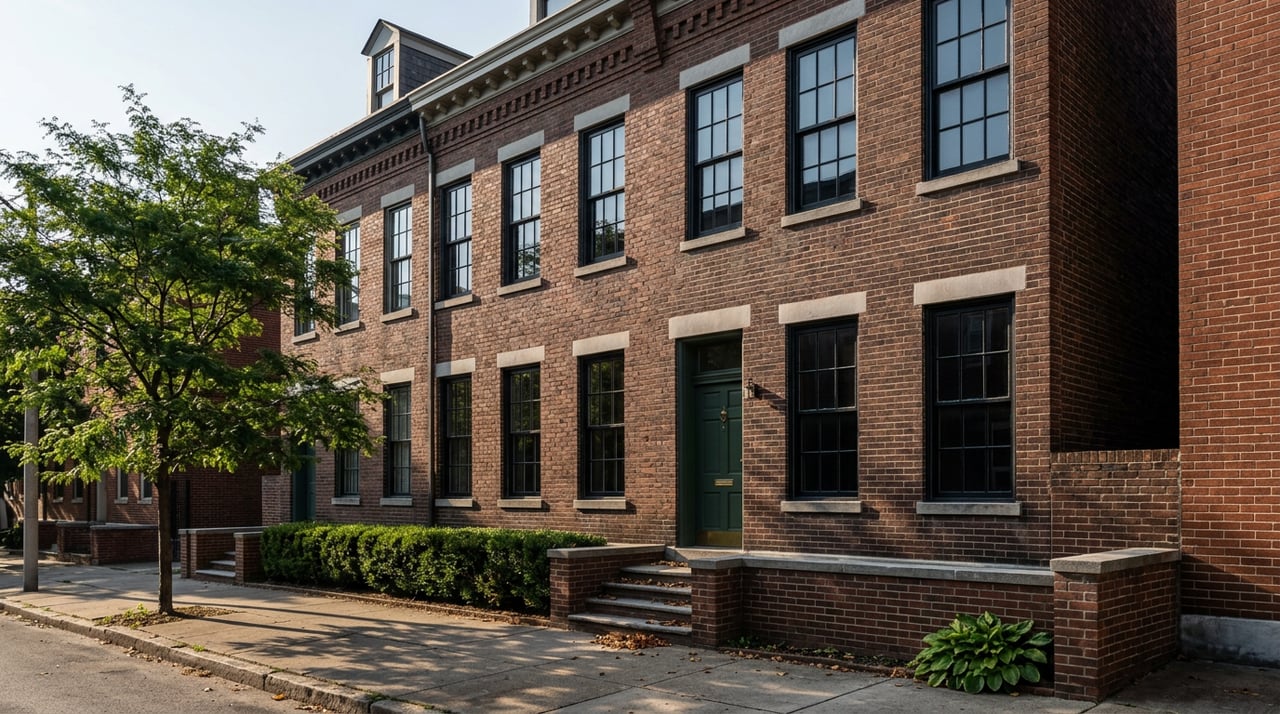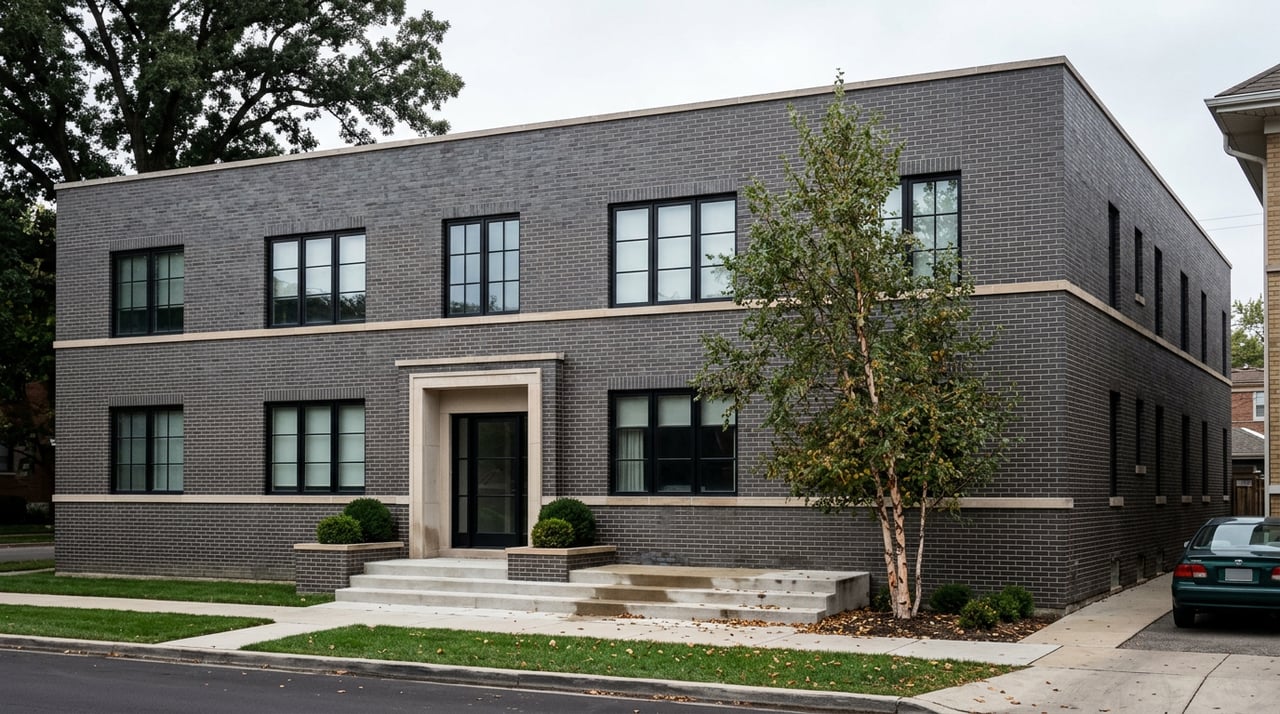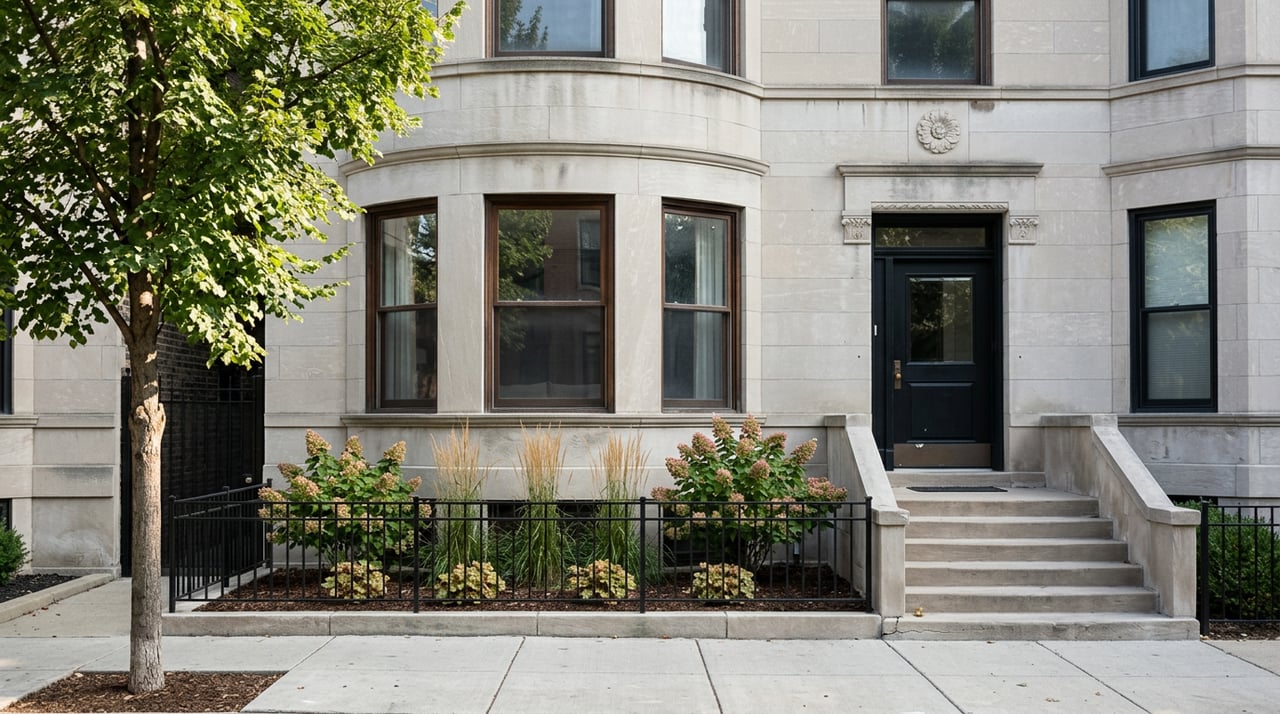
A buyer who has spent a weekend on the portals will tell you the Logan Square median is somewhere between $508,000 and $578,000, depending on which tab they left open. Both numbers are accurate. Neither is useful. Behind that single figure sit three different products at three different price bands, and behind the two-flat market in particular sit two zoning overlays that decide whether the building you are bidding on cash-flows on day one or waits six weeks for a preservation-commission signoff before anyone touches the parapet.
If you are comparing Logan Square to Bucktown, Avondale, or Humboldt Park with a spreadsheet, this is where your spreadsheet is wrong.
The median is three medians
Pull the last few months of attached and detached sales apart and the neighborhood resolves into three distinct submarkets. Condos, single-family homes, and small multifamily are being priced as if they were separate cities that happen to share a Blue Line stop.
| Product | Median / typical band | Reference window |
|---|---|---|
| Condos | ~$425,000 | Reported Feb 2026 |
| Attached (blended) | ~$507,500, 65 closings in 90 days | Net Gain Realty, updated Feb 28, 2026 |
| Single-family homes | ~$823,250 | Reported Feb 2026 |
| Two-flats and small multifamily | ~$350,000 fixers to $1.2M+ renovated / boulevard | 2025–early 2026 range |
| All-product neighborhood median | $578,000, 41 days on market, $378/sqft | Redfin, March 2026 |
The all-product $578K figure is a weighted average of those columns. It moves whenever the mix moves. Redfin's March 2026 report showed the median down 14.6% year over year while price per square foot rose 4.9% to $378, which is the statistical signature of a mix shift, not a value shift. Fewer high-end homes closed. The homes that did close were smaller and denser. A buyer reading the headline as "prices are falling" is reading the wrong story.
What a 0% price-reduction rate is really telling you
The number that should stop a buyer cold is the one nobody puts in the portal summary. Over the 90-day window ending in late February 2026, zero percent of attached listings in Logan Square cut their price before selling, sale-to-list landed at 99%, and inventory sat around 0.7 months of supply. The $600,000 to $650,000 band cleared at roughly 102% of asking, with some segments going under contract in as little as six days.
Read that carefully. It is not the fingerprint of a bidding-war market. It is the fingerprint of a pricing-discipline market. Sellers who overprice are not cutting. They are sitting. The 24-day average time to contract is longer than a hot-neighborhood number would be, and it varies widely by band. Underwrite Logan Square as a market where a well-priced listing goes fast and a mispriced one goes nowhere, and where the buyer's leverage lives almost entirely in choosing which listing to engage.
The overlay nobody is pricing in yet
On April 1, 2026, Chicago's permanent Additional Dwelling Unit ordinance took effect. The city went from roughly 116,000 parcels eligible under the 2021 pilot to more than 320,000 parcels under the permanent program. ADUs are now permitted by-right in all multi-unit residential zoning and in certain business and commercial districts, plus single-family districts in 34 wards where the alderperson opted in.
Logan Square sat inside the original Northwest pilot zone. Those blocks are treated as pre-opted-in on April 1. Blocks in surrounding RS single-family zoning depend on whether the alderperson has opted them in, and with what limitations. Two houses across the street from each other can now carry different coach-house rights.
For a two-flat buyer, that changes the math on which building is actually a three-unit in waiting. Coach houses are capped at 22 feet in height, and on a standard lot the floor area cap works out to around 450 square feet. Interior conversion units, meaning basement or attic ADUs, require the building to be at least 20 years old, which every vintage Logan Square two-flat clears without thinking about it. Ceiling height in a habitable basement conversion has to be 7 feet 6 inches throughout. No additional parking is required, even if the coach house replaces the existing garage.
The buyer's move here is unglamorous and specific:
- Verify the parcel's eligibility before you write the offer. The city's ADU program page is the source of record; independent tools like Chicago Cityscape and aduchecker.com map opt-in areas parcel by parcel.
- Confirm any illegal existing unit is documented. A "non-conforming" basement or attic on the listing sheet is either an asset to be legalized through the same permitting path or a liability sitting under your closing.
- Check the Cook County Assessor's Home Improvement Exemption. A portion of the added value from a new ADU can be exempted for up to four years, which changes the after-tax underwriting on the coach house you were going to build in year two.
- If the property received city financial assistance, the 60% AMI affordability requirement runs 30 years. A market-rate rental pro forma does not apply.
None of this shows up in a comparable sales pull. All of it shows up in what the building is actually worth to the buyer who understands it.
The second overlay: the Boulevards Landmark District
The Logan Square Boulevards District was added to the National Register of Historic Places in 1985 and designated a Chicago Landmark in 2005. If the two-flat you are bidding on faces Logan Boulevard, Kedzie Boulevard, or Palmer Square, exterior work triggers preservation-commission review before permits issue. Contractors doing routine roof and masonry work on boulevard-facing addresses typically build in four to eight additional weeks for that signoff.
That is a schedule cost, not a construction cost, and it lands on the seller side almost as often as the buyer side. A boulevard-facing greystone that needs tuckpointing before a sale can push a listing back a month. A buyer planning to renovate before move-in should assume the boulevard premium comes with a boulevard permit timeline. On the buyer's own carry, four to eight weeks of preservation review is one to two additional mortgage payments before rent starts.
Pricing this into an offer is straightforward once you see it. Boulevards-facing two-flats and greystones command a premium, and correctly so. The premium is real. The buyer who does not adjust their renovation Gantt chart by six weeks is the one who feels surprised at closing.
What buyers are actually paying to renovate
Two-flat buyers underwriting a value-add strategy in the current market should use these bands rather than a national calculator:
- Cosmetic refresh across both units of a two-flat: roughly $60,000 to $100,000 total.
- Mid-range dual-unit renovation: $150,000 to $250,000.
- Greystone gut renovation: $150 to $400 per square foot, with full guts on a 2,500 to 3,500 square foot home running $250,000 to $600,000 over a six-to-twelve-month timeline.
- ROI on quality Logan Square greystone renovations tracks in the 78% to 88% range, below Lincoln Park's 85% to 95% but with a lower entry basis.
A $17,500 TPO flat-roof replacement on a Logan Square two-flat is a normal number in 2026. A $22,000 to $28,000 architectural-shingle job on a boulevard-facing greystone with landmark review is also a normal number. Which one you are quoting depends entirely on which side of Kedzie the building sits on.
Financing the two-flat side of the market
An owner-occupant buying a small multifamily has two paths worth knowing before they tour a building. FHA financing on a two-to-four-unit purchase requires as little as 3.5% down, with reserve rules and a self-sufficiency test that tightens on three- and four-unit deals. Conventional guidance updated in late 2023 allows as little as 5% down on owner-occupied two-to-four-unit purchases, subject to lender implementation. The rent side of the underwriting can lean on RentCafe's February 2026 Logan Square average of $2,249, one-bedroom around $2,197, two-bedroom around $3,100, and Zumper's June 2026 average of $2,300 with two-bedroom units at $2,575. Vintage two-flat units with original layouts and no in-unit laundry underwrite below those averages. Duplexes with private outdoor space approach the top of the range.
The offer, rewritten
The reader who came in comparing medians should leave with a different worksheet. A Logan Square offer on a two-flat in 2026 is a bid on three things at once: the building, the ADU eligibility of the parcel, and the boulevard-or-not schedule risk on the exterior scope. Portals price the first. The second and third are the buyer's job.
FAQ
Is Logan Square a buyer's or seller's market right now? Neither label fits cleanly. A 24-day average time to contract sits inside the balanced range, but 0.7 months of supply and 0% price reductions over the last 90-day window read seller-friendly. The practical reading is that well-priced listings clear quickly and overpriced ones do not clear at all.
Does the new ADU ordinance mean I can add a coach house to any Logan Square property on April 1? No. Multi-unit residential zoning is by-right. Single-family RS zoning depends on whether your specific block was opted in and with what limitations, such as caps on permits per block per year. Check the parcel before you write the offer.
How do I know whether a specific address is inside the Boulevards Landmark District? The district was Chicago-landmarked in 2005 and listed on the National Register in 1985. The City of Chicago's landmark maps show boundaries precisely. Any exterior work inside the district on a boulevard-facing address should assume a preservation-commission review step.
Ready to write the offer, not just read the median?
Vesta Preferred Realty has been closing Logan Square condos, greystones, and two-flats since 2009. If you are comparing buildings on the same block that price $200,000 apart and cannot tell why, that is the conversation we have every week. Get a home valuation, an ADU-eligibility read on the parcel, and an honest look at what the number on the portal is actually describing.