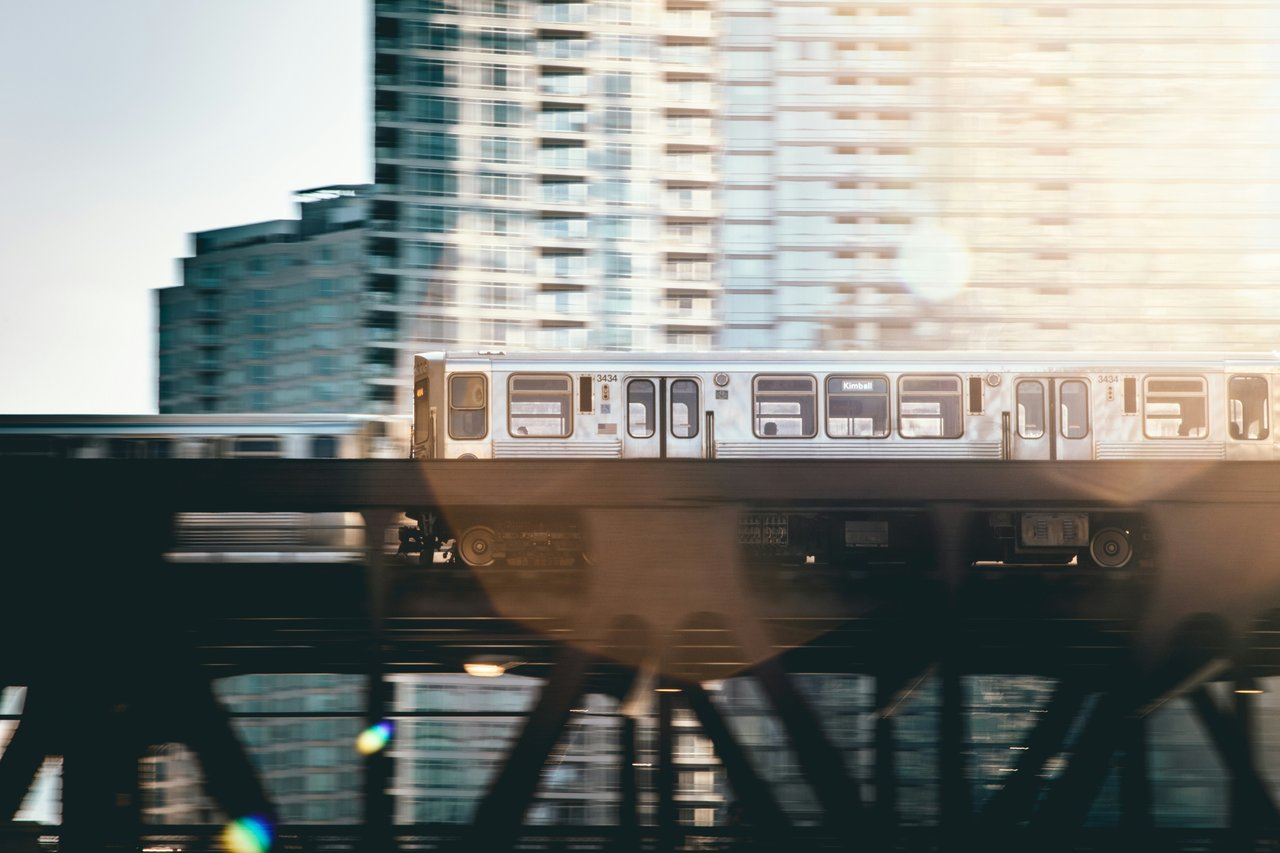
One of the first questions Chicago homebuyers ask is: how far is the nearest L station? The answer shapes everything from your morning commute to your home's resale value. The Vesta Preferred Realty team works with buyers across 14 Chicago neighborhoods to help you determine the right fit for your commuting needs.
This post breaks down exactly which CTA lines serve each Chicago neighborhood, how far you'll walk to the platform, and how train commutes stack up against driving. Whether you're searching for your next home in a transit-rich area or weighing trade-offs between walkability and square footage, this guide gives you the numbers.
What is the L, and which lines matter most?
Chicago's L (short for "elevated") is the CTA's rail system. Eight color-coded lines connect neighborhoods across the city to the downtown Loop, O'Hare Airport, and Midway Airport. Here's a quick reference:
-
Red Line: Runs north-south through the city. 24-hour service. Connects Howard (north) to 95th/Dan Ryan (south).
-
Blue Line: Runs northwest to the Loop and west to Forest Park. 24-hour service. Direct connection to O'Hare Airport.
-
Brown Line: Runs from Kimball through the north side into the Loop. Popular with Lincoln Park, Lakeview, and Old Town commuters.
-
Green Line: Runs west and south from the Loop. Key stations in the West Loop.
-
Pink Line: Shares tracks with the Green Line through the West Loop before heading southwest to 54th/Cermak.
-
Orange Line: Connects Midway Airport to the Loop via the South Loop.
-
Purple Line: Express service during rush hour from Evanston into the Loop via Lincoln Park and Old Town.
|
Local Tip: The Red and Blue lines are the only two that run 24 hours. If late-night transit access matters to you, prioritize neighborhoods on those lines. |
How close is each neighborhood to the nearest L station?
The table below ranks all 14 neighborhoods by typical walk time to the nearest station. Walk times are based on the center of each neighborhood, so your actual distance will depend on where you buy within it.
|
Neighborhood |
CTA Line(s) |
Nearest Station(s) |
Walk to Station |
|
All lines (Red, Blue, Brown, Green, Orange, Pink, Purple) |
Clark/Lake, State/Lake, Washington, Monroe, Jackson |
1–3 min |
|
|
Red, Brown, Purple |
Grand/State (Red), Merchandise Mart (Brown/Purple) |
3–8 min |
|
|
Green, Pink, Blue |
Morgan, Clinton, Ashland, UIC-Halsted (Blue) |
3–8 min |
|
|
Green, Pink |
Morgan |
3–5 min |
|
|
Red, Brown, Purple |
Fullerton, Armitage |
5–10 min |
|
|
Red, Brown, Purple |
Belmont, Addison (Red), Wellington, Diversey (Brown) |
3–10 min |
|
|
Blue |
Logan Square, California |
3–8 min |
|
|
Blue |
Damen |
3–5 min |
|
|
Brown, Purple Express |
Sedgwick |
5–10 min |
|
|
Red |
Clark/Division |
5–12 min |
|
|
Red, Green, Orange |
Roosevelt, Harrison, Cermak-Chinatown |
5–10 min |
|
|
Blue |
Belmont (Blue), Addison (Blue) |
8–15 min |
|
|
Red (peripheral) |
Grand/State, Chicago (Red) — on western edge |
10–18 min |
|
|
Blue, Green/Pink (peripheral) |
Division (Blue), Ashland-Lake (Green/Pink) |
15–20 min |
Neighborhood-by-Neighborhood Breakdown
The Loop
As good as it gets. Every CTA line passes through the Loop's elevated track circuit. You're never more than a few blocks from a station, and Clark/Lake alone connects six lines. If your priority is minimizing commute time, this is ground zero.
River North
Very easy. Grand/State (Red Line) and Merchandise Mart (Brown/Purple) are both within a short walk of most River North addresses. The Red Line gets you to the Loop in under five minutes, and the Brown Line connects directly to the north side.
West Loop
The West Loop benefits from Morgan station (Green/Pink Line), which opened in 2012 specifically to serve this rapidly growing area. Clinton and Ashland stations add more coverage. Residents living closer to Halsted also have access to the Blue Line at UIC-Halsted. For more on what daily life looks like here, read what it's like to live in Chicago's West Loop.
Fulton Market
Yes. Morgan station sits right in the heart of Fulton Market, putting the Green and Pink lines within a three-to-five-minute walk. Clinton station is a short walk east. The neighborhood's transit access is a major reason it has attracted tech companies and new residential development over the past decade.
Lincoln Park
Fullerton station is the neighborhood's main hub, connecting the Red, Brown, and Purple Express lines. It's one of the busiest stations on the north side and runs 24 hours thanks to Red Line service. Armitage station (Brown/Purple) is the other key stop, located closer to the southern end of the neighborhood.
Lakeview
Lakeview has some of the densest L coverage on the north side. The Red Line runs through with stations at Belmont, Addison (right next to Wrigley Field), and Sheridan. The Brown Line adds Wellington, Diversey, and Paulina. Belmont is a major transfer point between the Red and Brown lines. For a deeper look at getting around without a car, see car-free living in Lakeview.
Logan Square
The Blue Line. Logan Square station is the neighborhood's anchor, located right on Milwaukee Avenue. California station serves the western side. The Blue Line's 24-hour service and direct connection to O'Hare make this one of the most transit-friendly neighborhoods for buyers who fly frequently. If you're comparing this area to other north side options, check out Logan Square vs Roscoe Village for first-time buyers.
Wicker Park
Extremely close. The Damen Blue Line station sits right at the intersection of Milwaukee, North, and Damen, which is the center of the neighborhood. Most Wicker Park addresses are within a five-minute walk. Like Logan Square, you get 24-hour service and a direct shot to O'Hare.
Old Town
Sedgwick station (Brown Line, Purple Express) is the main stop, located on the western edge of Old Town near North Avenue. The Brown Line connects you to the Loop in about 10 minutes. Clark/Division (Red Line) is also walkable from the southern end of the neighborhood, giving you 24-hour access on the Red Line as a backup.
Gold Coast
Clark/Division (Red Line) is the primary station, located at the intersection of Gold Coast and Old Town. From the heart of the Gold Coast near Oak Street, it's roughly a 5-to-12-minute walk depending on your block. The Chicago station (Red Line) is also accessible from the southern edge. Bus routes along Michigan Avenue and State Street supplement train access.
South Loop
Yes. Roosevelt station is the main hub, bringing together the Red, Green, and Orange lines. Harrison station (Red Line) covers the northern end, and Cermak-Chinatown (Red Line) covers the south. The Orange Line is a bonus for anyone who flies out of Midway regularly. Metra Electric service at Museum Campus/11th Street adds another commuter rail option.
Avondale
It depends on where you are within the neighborhood. The Blue Line's Belmont and Addison stations border Avondale's eastern and northern edges, but the interior of the neighborhood is farther out, with walk times ranging from 8 to 15 minutes. Bus routes along Belmont and Milwaukee fill the gaps. Avondale's relative distance from the L is one reason home prices remain more accessible than in neighboring Logan Square.
Streeterville
Streeterville is one of the more transit-distant downtown neighborhoods. Grand/State and Chicago (both Red Line) sit on the western boundary, but deeper into Streeterville near the lakefront, you're looking at a 15-to-18-minute walk. Many residents rely on the #66, #151, and #29 bus routes or walk to Michigan Avenue stops. The trade-off is direct lakefront access.
Ukrainian Village
Ukrainian Village does not have an L station within its borders. The closest options are Division (Blue Line) on the northern edge and Ashland-Lake (Green/Pink) on the southern edge, both roughly a 15-to-20-minute walk from the center. The #66 Chicago bus is the neighborhood's transit lifeline, connecting residents to Blue, Brown, and Red Line stations. For a broader look at the neighborhood, see Ukrainian Village living: architecture, cafes, and community.
|
Local Tip: If you're buying in Ukrainian Village or Streeterville and commute daily by train, budget an extra 10-15 minutes for the walk or bus connection. Many residents in these neighborhoods keep a bike or use a Divvy membership to bridge the gap. |
How does the L compare to driving downtown during rush hour?
For most neighborhoods, the L is faster and more predictable than driving during morning and evening rush. Here's how they compare:
|
Neighborhood |
L Train to Loop |
Driving to Loop (Rush Hour) |
|
The Loop |
0 min (you're here) |
N/A |
|
River North |
3–6 min |
10–20 min |
|
West Loop / Fulton Market |
4–8 min |
10–15 min |
|
Lincoln Park |
10–15 min |
15–30 min |
|
Lakeview |
12–20 min |
20–35 min |
|
Logan Square |
10–15 min |
20–30 min |
|
Wicker Park |
8–12 min |
15–25 min |
|
Old Town |
8–12 min |
12–20 min |
|
Gold Coast |
5–8 min |
10–15 min |
|
South Loop |
3–8 min |
8–15 min |
|
Avondale |
15–22 min |
20–35 min |
|
Streeterville |
5–8 min (Red Line) |
10–20 min |
|
Ukrainian Village |
12–18 min (with bus) |
15–25 min |
Driving times assume rush hour traffic (7:30–9:00 AM). L train times are measured station to the Loop, not including walk time to the platform. In most cases, the train wins on consistency since you won't get stuck on the Kennedy or the Dan Ryan.
Does L access affect Chicago home prices?
Yes, and the data is consistent. Homes within a 5-minute walk of an L station generally command a price premium over comparable properties farther away. The effect is strongest along the Red and Brown lines on the north side, where demand is highest.
That said, it's not the only factor. Neighborhoods like Ukrainian Village and Avondale offer more space and lower price points precisely because they're not sitting on top of a station. Buyers who don't commute daily by train, or who work remotely, may find better value in those areas. A home valuation can help you see how transit proximity factors into pricing for specific addresses.
Frequently Asked Questions
Which Chicago neighborhood has the best L access?
The Loop has the most stations and the most lines, but for residential buyers, Lakeview and Lincoln Park offer the best combination of multiple lines, frequent service, and walkable station proximity.
Can you live in Chicago without a car?
Absolutely, especially in neighborhoods with direct L access. The Loop, River North, West Loop, Lakeview, Lincoln Park, Logan Square, and Wicker Park all have walk scores above 90 and strong bus networks. Streeterville and Ukrainian Village are more car-dependent due to their distance from stations, though buses and bikes help close the gap. If you're weighing that decision, renting vs. buying in Chicago covers some of the financial trade-offs.
Does living near the L mean more noise?
It can, particularly for elevated stations. Ground-level subway stations (like most Red Line stops) produce less street noise. If noise is a concern, look for buildings with double-paned windows or units that don't directly face the tracks. Brown Line elevated sections through Lakeview and Lincoln Park are the most common sources of train noise complaints.
Are there plans to expand the L system?
The CTA's Red Line Extension project will add four new stations south of 95th Street, which is the biggest expansion in decades. On the north and west sides where these 14 neighborhoods sit, no new stations are currently planned, so the access picture described above is stable for the foreseeable future.
How much does the L cost?
A single ride is $2.50 with a Ventra card. Transfers to a second train or bus within two hours cost $0.25. Unlimited ride passes are available for 1-day ($5), 3-day ($15), 7-day ($20), and 30-day ($75) periods.
Have questions about which neighborhood fits your commute? Vesta Preferred Realty are top Chicago real estate agents helping buyers find homes across all 14 of these neighborhoods. Reach out to start the conversation.